
More New and Used
from Private Sellers
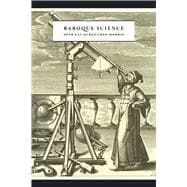
Baroque Science
by Gal, Ofer; Chen-morris, RazISBN13:
9780226923987
ISBN10:
0226923983
Format:
Hardcover
Pub. Date:
3/13/2013
Publisher(s):
Univ of Chicago Pr
List Price: $45.00
Rent Textbook
(Recommended)Term
Due
Price
Short Term
Aug 2
$31.50
Semester
Sep 30
$36.00
Quarter
Aug 21
$33.75
$31.50
Buy New Textbook
Usually Ships in 3-5 Business Days
$43.88
Used Textbook
We're Sorry
Sold Out
eTextbook
We're Sorry
Not Available
Questions About This Book?
Why should I rent this book?
Renting is easy, fast, and cheap! Renting from eCampus.com can save you hundreds of dollars compared to the cost of new or used books each semester. At the end of the semester, simply ship the book back to us with a free UPS shipping label! No need to worry about selling it back.
How do rental returns work?
Returning books is as easy as possible. As your rental due date approaches, we will email you several courtesy reminders. When you are ready to return, you can print a free UPS shipping label from our website at any time. Then, just return the book to your UPS driver or any staffed UPS location. You can even use the same box we shipped it in!
What version or edition is this?
This is the edition with a publication date of 3/13/2013.
What is included with this book?
- The New copy of this book will include any supplemental materials advertised. Please check the title of the book to determine if it should include any CDs, lab manuals, study guides, etc.
- The Rental copy of this book is not guaranteed to include any supplemental materials. You may receive a brand new copy, but typically, only the book itself.
Summary
In Baroque Science, Ofer Gal and Raz D. Chen-Morris present a radically new perspective on the study of early modern science. Instead of the triumph of reason and rationality and the celebration of the discoveries and breakthroughs of the period, they examine science in the context of the baroque, analyzing the tensions, paradoxes, and compromises that shaped the New Science of the seventeenth century and enabled its spectacular success. Gal and Chen-Morris show how scientists during the seventeenth century turned away from the trust in the acquisition of knowledge through the senses towards a growing reliance on the mediation of artificial instruments, such as lenses and mirrors for observation and mechanical and pneumatic devices for experimentation. Likewise, the mathematical techniques and procedures that allowed the success of mathematical natural philosophy turned increasingly obscure and artificial, and in place of divine harmonies they revealed an assemblage of isolated, contingent laws and constants. In its attempts to enforce order in the face of threatening chaos, blur the boundaries of the natural and the artificial, and mobilize passions in the service of objective knowledge, Gal and Chen-Morris reveal, the New Science is a baroque phenomenon.
CART


