
More New and Used
from Private Sellers
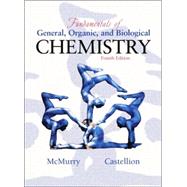
Fundamentals of General, Organic and Biological Chemistry
by McMurry, John; Castellion, Mary E.Edition:
4th
ISBN13:
9780130418425
ISBN10:
0130418420
Format:
Hardcover
Pub. Date:
1/1/2003
Publisher(s):
PRENTICE HALL
List Price: $127.80
Rent Textbook
(Recommended)Term
Due
Price
Short Term
Aug 2
$9.84
Semester
Sep 30
$63.90
Quarter
Aug 21
$57.51
$9.84
Buy Used Textbook
In Stock Usually Ships in 24 Hours.
$1.34
eTextbook
We're Sorry
Not Available
New Textbook
We're Sorry
Sold Out
Questions About This Book?
Why should I rent this book?
Renting is easy, fast, and cheap! Renting from eCampus.com can save you hundreds of dollars compared to the cost of new or used books each semester. At the end of the semester, simply ship the book back to us with a free UPS shipping label! No need to worry about selling it back.
How do rental returns work?
Returning books is as easy as possible. As your rental due date approaches, we will email you several courtesy reminders. When you are ready to return, you can print a free UPS shipping label from our website at any time. Then, just return the book to your UPS driver or any staffed UPS location. You can even use the same box we shipped it in!
What version or edition is this?
This is the 4th edition with a publication date of 1/1/2003.
What is included with this book?
- The Used copy of this book is not guaranteed to inclue any supplemental materials. Typically, only the book itself is included.
- The Rental copy of this book is not guaranteed to include any supplemental materials. You may receive a brand new copy, but typically, only the book itself.
Related Products
Summary
For two-semester/three-quarter courses in General, Organic, and Biological Chemistry, primarily for majors in Allied Health, and occasionally in Environmental Technology, Agriculture, and other majors.Having secured the loyalty of both instructors and students, this best-selling, highly student-oriented text offers clear and concise use of language, thoughtful attention to problem-solving, and engaging discussions of relevant applications. Readable without sacrificing depth of content, it effectively covers the essentials of allied health chemistry without becoming bogged down in excessive and unnecessary detail, and puts chemistry in the context of everyday life. Maintaining interest and promoting student confidence, it offers a relaxed and friendly writing style that is highly accessible to the student with no scientific background and encourages analytic skill-building throughout with numerous problems, worked-out examples, and conceptual exercises.
Table of Contents
1. Matter and Life.
2. Measurements in Chemistry.
3. Atoms and the Periodic Table.
4. Ionic Compounds.
5. Molecular Compounds.
6. Chemical Reactions: Classification and Mass Relationships.
7. Chemical Reactions: Energy, Rates and Equilibrium.
8. Gases, Liquids, and Solids.
9. Solutions.
10. Acids and Bases.
11. Nuclear Chemistry.
12. Introduction to Organic Chemistry: Alkanes.
13. Alkenes, Alkynes, and Aromatic Compounds.
14. Some Compounds with Oxygen, Sulfur, or a Halogen.
15. Amines.
16. Aldehydes and Ketones.
17. Carboxylic Acids and their Derivatives.
18. Amino Acids and Proteins.
19. Enzymes and Vitamins.
20. Chemical Messengers: Hormones, Neurotransmitters, and Drugs.
21. The Generation of Biochemical Energy.
22. Carbohydrates.
23. Carbohydrate Metabolism.
24. Lipids.
25. Lipid Metabolism.
26. Nucleic Acids and Protein Synthesis.
27. Genomics.
28. Protein and Amino Acid Metabolism.
29. Body Fluids.
2. Measurements in Chemistry.
3. Atoms and the Periodic Table.
4. Ionic Compounds.
5. Molecular Compounds.
6. Chemical Reactions: Classification and Mass Relationships.
7. Chemical Reactions: Energy, Rates and Equilibrium.
8. Gases, Liquids, and Solids.
9. Solutions.
10. Acids and Bases.
11. Nuclear Chemistry.
12. Introduction to Organic Chemistry: Alkanes.
13. Alkenes, Alkynes, and Aromatic Compounds.
14. Some Compounds with Oxygen, Sulfur, or a Halogen.
15. Amines.
16. Aldehydes and Ketones.
17. Carboxylic Acids and their Derivatives.
18. Amino Acids and Proteins.
19. Enzymes and Vitamins.
20. Chemical Messengers: Hormones, Neurotransmitters, and Drugs.
21. The Generation of Biochemical Energy.
22. Carbohydrates.
23. Carbohydrate Metabolism.
24. Lipids.
25. Lipid Metabolism.
26. Nucleic Acids and Protein Synthesis.
27. Genomics.
28. Protein and Amino Acid Metabolism.
29. Body Fluids.
CART


