 Top
Top
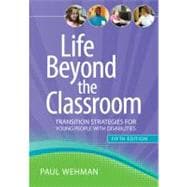
Note: Supplemental materials are not guaranteed with Rental or Used book purchases.
Purchase Benefits
 Free Shipping On Orders Over $35!
 Get Rewarded for Ordering Your Textbooks! Enroll Now
 Customer Reviews Read Reviews
 Write a Review
What is included with this book?
| About the Online Companion Materials | p. xi |
| About the Author | p. xiii |
| About the Contributors | p. xv |
| Preface | p. xxiii |
| Acknowledgments | p. xxvii |
| Introduction | |
| Transition: New Horizons and Challenges | p. 3 |
| Meet the Faces of Transition in America | |
| Defining Transition | |
| 2010 Survey of Americans with Disabilities: Much Work Remains to Help Persons with Disabilities Gain Employment | |
| National Longitudinal Transition Study-2: What Happens to Youth When They Leave School? | |
| Gallup Poll Employer Results: The News Is Not All Bad | |
| Is Business the Answer to Improving Transition Outcomes? | |
| Making the Journey to Adulthood: The Importance of Setting Goals | |
| Evidence-Based Transition Research: The Foundation for Recommended Practices | |
| Related Disability Legislation | |
| Challenges that Affect Youth with Disabilities | |
| Transition Themes for Success: Why Do Some Students Succeed and Others Do Not? | |
| Conclusion | |
| Study Questions | |
| Online Resources | |
| Self-Determination: Getting Students Involved in Leadership | p. 41 |
| What Is Self-Determination? | |
| Self-Determination, Disability, and Empowerment | |
| Assessments, Methods, and Strategies to Promote Self-Determination | |
| Conclusion | |
| Study Questions | |
| Online Resources | |
| Families and Young People with Disabilities: Listening to Their Voices | p. 69 |
| Parent and Student Involvement as Key Components of Successful Transition | |
| Barriers to and Strategies for Involvement | |
| Supporting Improved Outcomes | |
| Conclusion | |
| Study Questions | |
| Online Resources | |
| Transition Planning and Support | |
| Individualized Transition Planning: Building the Roadmap to Adulthood | p. 95 |
| Goals of Individualized Transition Planning | |
| Person-Centered Planning: Values and Transition | |
| Tools and Strategies Associated with Person-Centered Transition Approaches | |
| Student-Directed Transition Individualized Education Programs | |
| Evidence-Based Practices in Transition Planning | |
| What Are the Best Steps to Implement Person-Centered Individualized Transition Planning? | |
| Conclusion | |
| Study Questions | |
| Online Resources | |
| Multicultural Transition Planning: Including All Youth with Disabilities | p. 121 |
| Defining Diversity | |
| Thinking Ecologically: Understanding Culture as Interaction and Process | |
| Strategies for Transition Planning and Education in a Diverse Society | |
| Conclusion | |
| Study Questions | |
| Online Resources | |
| Transition Planning and Community Resources: Bringing It All Together | p. 143 |
| Community Organizations: Service Structures and Outcomes | |
| Social Security Work Incentives: Removing Barriers to Work | |
| Impact of Employment on Supplemental Security Income Benefits | |
| Transition and Community Training, Employment, and Support Programs | |
| Strong Alliances Between Schools and Businesses | |
| Conclusion | |
| Study Questions | |
| Online Resources | |
| Transition Service Delivery in the Schools | |
| Full Inclusion into Schools: Strategies for Collaborative Instruction | p. 175 |
| National Commitment to Inclusion | |
| A Historical Perspective on Inclusion | |
| Philosophical Approaches to Inclusion | |
| Special Education Service Delivery | |
| Preparing for Successful Inclusion | |
| Transition and Inclusion | |
| Inclusive Community Programming | |
| Conclusion | |
| Study Questions | |
| Online Resources | |
| High-Stakes Accountability and Students with Disabilities: The Past and What's to Come | p. 197 |
| What Are the New Reform Policies? | |
| The Next Phase of the Standards Movement | |
| The Challenge and Opportunity for Students with Disabilities | |
| Educational Attainment and Economic Implications | |
| Conclusion | |
| Study Questions | |
| Online Resources | |
| Secondary Curriculum and Transition | p. 215 |
| Issues Facing Secondary Curriculum Types of Curriculum | |
| Guidelines for Teachers in Curriculum Design | |
| Conclusion | |
| Study Questions | |
| Online Resources | |
| Assessment and Teaching for Transition | p. 235 |
| Teaching Academic Content to Secondary Students with Disabilities | |
| The General Education Curriculum | |
| Alteration of or Adaptation to the General Curriculum | |
| Conclusion | |
| Study Questions | |
| Online Resources | |
| Teaching Social Skills and Promoting Supportive Relationships | p. 261 |
| Importance of Social Skills and Relationships in the Lives of Youth | |
| Challenges Encountered by Youth with Disabilities | |
| Promising and Evidence-Based Intervention Approaches | |
| Developing a Peer Support Program | |
| Promoting Social Skills and Relationships Across Settings | |
| Designing Quality Instruction and Effective Supports | |
| Conclusion | |
| Study Questions | |
| Online Resources | |
| Work and Life in the Community | |
| Using Technology from School to Adulthood: Unleashing the Power | p. 285 |
| Impact of Assistive Technology on Quality of Life | |
| Employment and Assistive Technology | |
| Acquiring and Using Assistive Technology | |
| Conclusion | |
| Study Questions | |
| Online Resources | |
| Securing Meaningful Work in the Community: Vocational Internships, Placements, and Careers | p. 309 |
| What Is Possible: Setting Options for Work | |
| Barriers to Employment Competence | |
| Establishing a National Employment Agenda | |
| Vocational Options: What Are the Choices? | |
| Competitive Employment and Business Models | |
| Workplace Supports | |
| Conclusion | |
| Study Questions | |
| Online Resources | |
| Developing Jobs for Young People with Disabilities | p. 339 |
| School's Role in Improving Outcomes | |
| Guiding Points | |
| Job Development Defined | |
| Supported Employment | |
| Review of Literature | |
| Getting Prepared | |
| Creating a Job | |
| Conclusion | |
| Study Questions | |
| Online Resources | |
| Pursuing Postsecondary Education Opportunities for Individuals with Disabilities | p. 363 |
| New Postsecondary Education Opportunities for Students with Intellectual Disabilities | |
| Dual-Enrollment Opportunities for Students with Disabilities | |
| Postsecondary Transition Considerations | |
| Developing Essential Skills Needed for College | |
| Applying Strategies to Remain in College | |
| Conclusion | |
| Study Questions | |
| Online Resources | |
| Designing and Implementing Plans for Transition | |
| Applications for Youth with Intellectual Disabilities | p. 379 |
| Who Are Individuals with Intellectual Disabilities? | |
| Employment and School Participation for Youth with Intellectual Disabilities | |
| Challenges of Working with Youth with Intellectual Disabilities | |
| Assessment of Youth with Intellectual Disabilities | |
| Curriculum Strategies for Youth with Intellectual Disabilities | |
| Evaluating Transition Outcomes for Youth with Intellectual Disabilities | |
| Helping Individuals with Intellectual Disabilities Enter Inclusive Employment | |
| Conclusion | |
| Study Questions | |
| Online Resources | |
| Applications for Youth with Learning Disabilities | p. 401 |
| Defining Learning Disabilities | |
| Unique Challenges Presented by Youth with Learning Disabilities | |
| Assessment for Transition | |
| Setting Transition Goals | |
| Universal Design for Learning | |
| Instructing Students in a Multicultural Classroom | |
| Assistive Technology | |
| Preparing for Transition | |
| Conclusion | |
| Study Questions | |
| Online Resources | |
| Applications for Youth with Emotional and Behavior Disorders | p. 419 |
| Who Are Youth with Emotional Disturbance? | |
| Unique Challenges and Issues for Youth with Emotional and Behavior Disorders | |
| Discipline and Functional Assessment | |
| The Need for Highly Qualified Teachers | |
| Transition Assessment | |
| Teaching for Transition | |
| Supported Employment Outcomes for Individuals with Emotional and Behavior Disorders | |
| Conclusion | |
| Study Questions | |
| Online Resources | |
| Applications for Youth with Autism Spectrum Disorders | p. 447 |
| Characteristics of Youth with Autism Spectrum Disorders | |
| Diagnostic and Behavioral Characteristics of Individuals with Autism Spectrum Disorder | |
| Autism as a Multidimensional Disorder | |
| Unique Challenges of Transition-Aged Youth with Autism Spectrum Disorder | |
| Outcomes for Individuals with Autism Spectrum Disorder | |
| Characteristics of Excellent Transition Programs for Students with Autism Spectrum Disorder | |
| Transition Team Building for Youth with Autism Spectrum Disorder | |
| Identifying the Vision for Students with Significant Communication Deficits | |
| Curriculum, Literacy, and the Individualized Education Program | |
| Curriculum and Students with Autism Spectrum Disorder Who Work Toward Standard or Advanced Studies Diploma | |
| Scientifically Based Practices for Educating and Supporting Youth and Young Adults with Autism Spectrum Disorder | |
| Behavior Challenges, Functional Behavior Assessment, and Behavior Intervention Plans | |
| Transition Services for Individuals with Autism Spectrum Disorder | |
| Job Supports for Individuals with Autism Spectrum Disorder | |
| Conclusion | |
| Study Questions | |
| Online Resources | |
| Applications for Youth with Traumatic Brain Injury and Other Health Impairments | p. 473 |
| Who Are Individuals with Traumatic Brain Injury, Orthopedic Impairments, and Other Health Impairments? | |
| Assessment for Transition: Unique Challenges | |
| Assessment for Transition Needs | |
| Teaching Strategies and Supports for Transition to Work | |
| Designing and Implementing Individualized Transition Plans | |
| Transition from School to Work | |
| The Power of Technology | |
| Evaluation of Transition Outcomes | |
| Conclusion | |
| Study Questions | |
| Online Resources | |
| References | p. 501 |
| Glossary | p. 551 |
| Index | p. 565 |
| Table of Contents provided by Ingram. All Rights Reserved. |
The New copy of this book will include any supplemental materials advertised. Please check the title of the book to determine if it should include any access cards, study guides, lab manuals, CDs, etc.
The Used, Rental and eBook copies of this book are not guaranteed to include any supplemental materials. Typically, only the book itself is included. This is true even if the title states it includes any access cards, study guides, lab manuals, CDs, etc.


Need Help? Copyright © 1999-2024