 Top
Top
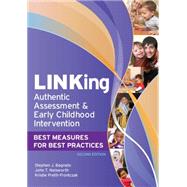
Note: Supplemental materials are not guaranteed with Rental or Used book purchases.
Purchase Benefits
 Free Shipping On Orders Over $35!
 Get Rewarded for Ordering Your Textbooks! Enroll Now
 Customer Reviews Read Reviews
 Write a Review
What is included with this book?
| About the Authors | p. x |
| Foreword | p. xiii |
| Preface | p. xvi |
| Acknowledgments | p. xviii |
| Authentic Assessment and Early Intervention in Context | p. 1 |
| Why Are Changes Needed in Early Childhood Measurement? | p. 3 |
| What Is Authentic Assessment? | p. 11 |
| What Are the Professional Standards for Developmentally Appropriate Assessment in Early Childhood Intervention? | p. 19 |
| How Can Professionals Apply the Best Measures for Best Practices? | p. 33 |
| What Are "Forecasts" of Promising Practices in Authentic Assessment? | p. 49 |
| Professional Standards and the LINK Social Validity Study | p. 63 |
| Alphabetical Listing of 87 Assessment Measures Included in the Initial Review | p. 73 |
| Combined LINK Indexes | p. 75 |
| Other Features | p. 83 |
| ABLLS“-R: The Assessment of Basic Language and Learning Skills-Revised | p. 89 |
| Adaptive Behavior Assessment System-Second Edition (ABAS-II) | p. 93 |
| Ages & Stages Questionnaires“, Third Edition (ASQ-3Ö): A Parent-Completed Child Monitoring System | p. 97 |
| Ages & Stages Questionnaires“: Social-Emotional (ASQ:SE): A Parent-Completed, Child-Monitoring System for Social-Emotional Behaviors | p. 98 |
| Assessment, Evaluation, and Programming System for Infants and Children (AEPS“), Second Edition | p. 99 |
| Autism Screening Instrument for Educational Planning-Third Edition (ASIEP-3) | p. 103 |
| Basic School Skills Inventory-Third Edition (BSSI-3) | p. 104 |
| Behavior Assessment System for Children, Second Edition (BASCÖ-2) | p. 105 |
| Behavior Rating Inventory of Executive Function“-Preschool Version (BRIEF“-P) | p. 110 |
| Behavioral Characteristics Progression (BCP) | p. 114 |
| BRIGANCE“ Inventory of Early Development-II (IED-II) | p. 118 |
| Callier-Azusa Scale G-Edition | p. 119 |
| The Carolina Curriculum for Infants and Toddlers with Special Needs, Third Edition (CCITSN), and The Carolina Curriculum for Preschoolers with Special Needs, Second Edition (CCPSN) | p. 123 |
| Communication and Symbolic Behavior ScalesÖ (CSBSÖ), Normed Edition | p. 127 |
| The Creative Curriculum“ Developmental Continuum for Infants, Toddlers & Twos and The Creative Curriculum“ Developmental Continuum for Ages 3-5 | p. 132 |
| Desired Results Developmental Profile access (DRDP access) | p. 138 |
| Desired Results Developmental Profile-Infant/Toddler Instrument (DRDP-R, IT) and Desired Results Developmental Profile-Preschool Instrument (DRDP-R, PS) | p. 142 |
| Developmental Assessment for Students with Severe Disabilities-Second Edition (DASH-2) | p. 143 |
| Developmental Observation Checklist System (DOCS) | p. 144 |
| Developmental Profile 3 (DP-3) | p. 148 |
| Developmental Programming for Infants and Young Children: Volume 2. Early Intervention Developmental Profile-Revised Edition | p. 149 |
| Devereux Early Childhood Assessment for Infants and Toddlers (DECA-I/T) and The Devereux Early Childhood Assessment (DECA) | p. 150 |
| The Early Learning Accomplishment ProfileÖ (E-LAPÖ) | p. 156 |
| Every Move Counts: Sensory-Based Communication Techniques | p. 157 |
| FACTER: Functional Assessment and Curriculum for Teaching Everyday Routines | p. 162 |
| The Functional Emotional Assessment Scale (FEAS) for Infancy and Early Childhood | p. 166 |
| The Galileo Pre-K Online System for the Electronic Management of Learning | p. 167 |
| HELP“-the Hawaii Early Learning Profile“ | p. 172 |
| HighScope Child Observation Record (COR) | p. 177 |
| Humanics National Infant-Toddler Assessment and Humanics National Preschool Assessment | p. 181 |
| Infant Toddler Social-Emotional AssessmentÖ (ITSEAÖ) | p. 182 |
| Infant-Toddler and Family Instrument (ITFI) | p. 183 |
| Infant-Toddler Developmental Assessment (IDA) | p. 184 |
| INSITE Developmental Checklist: Assessment of Developmental Skills for Young Multidisabled Sensory Impaired Children | p. 185 |
| Inventory for Client and Agency PlanningÖ (ICAPÖ) | p. 186 |
| Kent Inventory of Developmental Skills (KIDS) | p. 191 |
| Life Skills ProgressionÖ (LSPÖ): An Outcome and Intervention Planning Instrument for Use with Families at Risk | p. 192 |
| New Portage Guide Birth to Six | p. 193 |
| The Oregon Project for Preschool Children who are Blind or Visually Impaired, 6th edition (The OR Project) | p. 197 |
| The Ounce Scale | p. 202 |
| Partners in Play: Assessing Infants and Toddlers in Natural Contexts | p. 207 |
| The Pediatric Evaluation of Disability Inventory (PEDIÖ) | p. 212 |
| Preschool and Kindergarten Behavior Scales-Second Edition (PKBS-2) | p. 217 |
| Scales of Independent Behavior-RevisedÖ (SIB-RÖ) | p. 223 |
| The SCERTS“ Model: A Comprehensive Educational Approach for Children with Autism Spectrum Disorders | p. 224 |
| School Function Assessment (SFA) | p. 230 |
| SKI-HI Language Development Scale, 2nd Edition | p. 235 |
| Social Skills Improvement System Rating Scales (SSISÖ Rating Scales) | p. 236 |
| Temperament and Atypical Behavior Scale (TABS): Early Childhood Indicators of Developmental Dysfunction | p. 237 |
| Transdisciplinary Play-Based Assessment, Second Edition (TPBA2), and Transdisciplinary Play-Based Intervention, Second Edition (TPBI2) | p. 238 |
| Vineland Adaptive Behavior Scales, Second Edition (VinelandÖ-II) | p. 244 |
| Vineland Social Emotional Early Childhood Scales (VinelandÖ SEEC) | p. 245 |
| Vulpe Assessment Battery-Revised: Developmental Assessment • Performance Analysis • Individualized Programming for the Atypical Child | p. 250 |
| The Work Sampling System“ | p. 251 |
| References | p. 255 |
| Appendixes | |
| NAEYC Position Statement | p. 277 |
| DEC Positive Outcomes Position Statement | p. 309 |
| LINK Consumer Social Validity Survey Form | p. 355 |
| Where We Stand on Curriculum, Assessment, and Program Evaluation: NAEYC and NAECS/SDE | p. 367 |
| Author Index | p. 371 |
| Subject Index | p. 376 |
| Table of Contents provided by Ingram. All Rights Reserved. |
The New copy of this book will include any supplemental materials advertised. Please check the title of the book to determine if it should include any access cards, study guides, lab manuals, CDs, etc.
The Used, Rental and eBook copies of this book are not guaranteed to include any supplemental materials. Typically, only the book itself is included. This is true even if the title states it includes any access cards, study guides, lab manuals, CDs, etc.


Need Help? Copyright © 1999-2024