
More New and Used
from Private Sellers
List Price: $66.75
Rent Textbook
(Recommended)Term
Due
Price
Short Term
Aug 2
$16.69
Semester
Sep 26
$33.38
Quarter
Aug 17
$30.04
$16.69
Buy Used Textbook
In Stock Usually Ships in 24 Hours.
$8.03
eTextbook
We're Sorry
Not Available
New Textbook
We're Sorry
Sold Out
Questions About This Book?
Why should I rent this book?
Renting is easy, fast, and cheap! Renting from eCampus.com can save you hundreds of dollars compared to the cost of new or used books each semester. At the end of the semester, simply ship the book back to us with a free UPS shipping label! No need to worry about selling it back.
How do rental returns work?
Returning books is as easy as possible. As your rental due date approaches, we will email you several courtesy reminders. When you are ready to return, you can print a free UPS shipping label from our website at any time. Then, just return the book to your UPS driver or any staffed UPS location. You can even use the same box we shipped it in!
What version or edition is this?
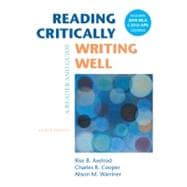
This is the 8th edition with a publication date of 7/1/2010.
What is included with this book?
- The Used copy of this book is not guaranteed to inclue any supplemental materials. Typically, only the book itself is included.
- The Rental copy of this book is not guaranteed to include any supplemental materials. You may receive a brand new copy, but typically, only the book itself.
Related Products
Summary
Click here to find out more about the 2009 MLA Updates and the 2010 APA Updates . Many instructors prefer to teach critical reading and writing without using a full-scale rhetoric. For them, Axelrod and Cooper have adapted the immensely successful approach ofThe St. Martin's Guide to Writingand applied it to a reader, creating a book that providesboth structure for students and flexibility for instructors. Chapter One introduces two general approaches to critical reading, showing students how to "read for meaning" and "read like a writer." Each of the following chapters then provides step-by-step guides to applying this knowledge in reading and writing a specific genre, ranging from autobiography to argument.
Author Biography
RISE B. AXELROD is McSweeney Professor of Rhetoric and?Teaching Excellence and director of composition at the University of California, Riverside. She has previously been professor of English at California State University, San Bernardino; director of the College Expository Program at the University of Colorado, Boulder; and assistant director of the Third College Composition Program at the University of California, San Diego.
CHARLES R. COOPER is an emeritus professor in the department of literature at the University of California, San Diego, where he served as coordinator of the Third College Composition Program, Dimensions of Culture Program, and Campus Writing Programs. He has also been codirector of the San Diego Writing Project, one of the National Writing Project Centers. He is coeditor, with Lee Odell, of Evaluating Writing and coauthor, with Susan Peck MacDonald, of Writing the World (Bedford/St. Martin’s, 2000).
Together, Axelrod and Cooper have coauthored for Bedford/St. Martin’s The St. Martin’s Guide to Writing, Eighth Edition (2008) and Axelrod & Cooper’s Concise Guide to Writing, Fourth Edition (2005).
ALISON M. WARRINER is Coordinator of Composition, Director of Writing Across the Curriculum, and professor of English at California State University, East Bay, where she has also been Director of the Collaborative Academic Preparation Initiative and the Summer Writing Institutes. Previously she was Director of Communications at Sacred Heart University. She is a coauthor of Academic Literacy: A Statement of Competencies Expected of Students Entering California’s Public Colleges and Universities (2002) and of the Expository Reading and Writing Course (ERWC) that is currently being introduced as Senior English into California public high schools through the Early Assessment Program of the CSU Chancellor’s Office.
CHARLES R. COOPER is an emeritus professor in the department of literature at the University of California, San Diego, where he served as coordinator of the Third College Composition Program, Dimensions of Culture Program, and Campus Writing Programs. He has also been codirector of the San Diego Writing Project, one of the National Writing Project Centers. He is coeditor, with Lee Odell, of Evaluating Writing and coauthor, with Susan Peck MacDonald, of Writing the World (Bedford/St. Martin’s, 2000).
Together, Axelrod and Cooper have coauthored for Bedford/St. Martin’s The St. Martin’s Guide to Writing, Eighth Edition (2008) and Axelrod & Cooper’s Concise Guide to Writing, Fourth Edition (2005).
ALISON M. WARRINER is Coordinator of Composition, Director of Writing Across the Curriculum, and professor of English at California State University, East Bay, where she has also been Director of the Collaborative Academic Preparation Initiative and the Summer Writing Institutes. Previously she was Director of Communications at Sacred Heart University. She is a coauthor of Academic Literacy: A Statement of Competencies Expected of Students Entering California’s Public Colleges and Universities (2002) and of the Expository Reading and Writing Course (ERWC) that is currently being introduced as Senior English into California public high schools through the Early Assessment Program of the CSU Chancellor’s Office.
Table of Contents
N.B. The Guide to Writing sections of Chapters 3 – 9 include the same subsections as Chapter 2; however, for the sake of brevity, the subheadings are not repeated in this abridged table of contents. Similarly, the subsections Reading for Meaning, Reading Like a Writer, and Reflecting on Your Experience follow the first readings in Chapters 3 – 9, though they are included only under Chapter 2 in this listing.
1. Introduction
Reading Critically
Reading for Meaning
Reading Like a Writer
Reading to Compare
Writing Well
The Writing Assignments
The Guide to Writing
2. Autobiography
Writing Situations for Autobiography
A Guide to Reading Autobiography
Readings
Annie Dillard, An American Childhood
Reading for Meaning
Reading Like a Writer
Reflecting on Your Experience with Autobiography
Saira Shah, Longing to Belong
Luis J. Rodriguez, Always Running
*Anne Morgan Gray, Daddy’s Loss
Brad Benioff, Rick (student)
Jean Brandt, Calling Home
A Guide to Writing Autobiography
Invention
Drafting
Reading a Draft Critically
Revising
Editing and Proofreading
Reflecting on What You Have Learned
3. Observation
Writing Situations for Observational Essays
A Guide to Reading Observational Essays
Readings
The New Yorker, Soup
John T. Edge, I’m Not Leaving Until I Eat This Thing
*William L. Hamilton, At Ole Miss, the Tailgaters Never Lose
*Peggy Orenstein, The Daily Grind: Lessons in the Hidden Curriculum
Brian Cable, The Last Stop (student)
*Katie Diehm, "Paddlers Sit Ready!": The Enduring Sport of Dragon Boating (student)
A Guide to Writing Observational Essays
4. Reflection
Writing Situations for Reflective Essays
A Guide to Reading Reflective Essays
Readings
Brent Staples, Black Men and Public Space
*Carl Safina, Comes a Turtle, Comes the World
*Steven Doloff, A Universe Lies on the Sidewalks of New York
*Carolina A. Miranda, Diving into the Gene Pool
Wendy Lee, Peeling Bananas (student)
Katherine Haines, Whose Body Is This? (student)
A Guide to Writing Reflective Essays
5. Explaining Concepts
Writing Situations for Essays Explaining Concepts
A Guide to Reading Essays Explaining Concepts
Readings
David Quammen, Is Sex Necessary? Virgin Birth and Opportunism in the Garden
Deborah Tannen, Marked Women
Beth L. Bailey, Dating
*Chip Heath and Dan Heath, Made to Stick: Why Some Ideas Survive and Others Die
Linh Kieu Ngo, Cannibalism: It Still Exists (student)
*Clayton Strothers, Flow (student)
A Guide to Writing Essays Explaining Concepts
6. Evaluation
Writing Situations for Evaluation
A Guide to Reading Evaluations
Readings
Amitai Etzioni, Working at McDonald’s
*Farhad Manjoo, iPod: I Love You, You’re Perfect, Now Change
*Ella Taylor, Hooverville: Little Miss Sunshine Lights into the American Family
*Stacy Shiff, Know It All
Christine Romano, "Children Need to Play, Not Compete" by Jessica Statsky: An Evaluation (student)
*Wendy Kim, Grading Professors (student)
A Guide to Writing Evaluations
7. Speculating about Causes or Effects
Writing Situations for Essays Speculating about Causes or Effects
A Guide to Reading Essays Speculating about Causes or Effects
Readings
Stephen King, Why We Crave Horror Movies
Natalie Angier, Intolerance of Boyish Behavior
*John Dutton, Toxic Soup
Jonathan Kozol, The Human Cost of an Illiterate Society
*Amber Ripplinger, Declining Coral Reefs (student)
*Joshua Slick, Not Just for Nerds Anymore (student)
A Guide to Writing Essays Speculating about Causes or Effects
8. Proposal to Solve a Problem
Writing Situations for Proposals
A Guide to Reading Proposals
Readings
*Michael Pollan, The Vegetable-Industrial Complex
*William F. Shughart II, Why Not a Football Degree?
*Gary Beck, Not Your Everyday Homeless Proposal
*Karen Kornbluh, Win-Win Flexibility
Patrick O’Malley, More Testing, More Learning (student)
*Jeff Varley, High School Starting Time (student)
A Guide to Writing Proposals
9. Position Paper
Writing Situations for Position Papers
A Guide to Reading Position Papers
Readings
*Vinod Khosla, My Big Biofuels Bet
*Karen Stabiner, Boys Here, Girls There: Sure, If Equality’s the Goal
*David Brooks, A Nation of Grinders
*David Moberg, Class Consciousness Matters
*Amber Dahlke, Sex Education in Schools (student)
Jessica Statsky, Children Need to Play, Not Compete (student)
A Guide to Writing Position Papers
Appendix 1: A Catalog of Critical Reading Strategies
Annotating
Martin Luther King, Jr., An Annotated Sample from "Letter from Birmingham Jail"
Previewing
Outlining
Summarizing
Paraphrasing
Synthesizing
Questioning to Understand and Remember
Contextualizing
Reflecting on Challenges to Your Beliefs and Values
Exploring the Significance of Figurative Language
Looking for Patterns of Opposition
Evaluating the Logic of an Argument
Using a Toulmin Analysis
Recognizing Emotional Manipulation
Judging the Writer’s Credibility
Considering Logical Fallacies
Comparing and Contrasting
Related Readings
Lewis H. Van Dusen, Jr., Legitimate Pressures and Illegitimate Results
Public Statement by Eight Alabama Clergymen
Appendix 2: Strategies for Research and Documentation
Conducting Research
Evaluating Sources Critically
Integrating Sources with Your Own Writing
Documenting Sources
* new to this edition
1. Introduction
Reading Critically
Reading for Meaning
Reading Like a Writer
Reading to Compare
Writing Well
The Writing Assignments
The Guide to Writing
2. Autobiography
Writing Situations for Autobiography
A Guide to Reading Autobiography
Readings
Annie Dillard, An American Childhood
Reading for Meaning
Reading Like a Writer
Reflecting on Your Experience with Autobiography
Saira Shah, Longing to Belong
Luis J. Rodriguez, Always Running
*Anne Morgan Gray, Daddy’s Loss
Brad Benioff, Rick (student)
Jean Brandt, Calling Home
A Guide to Writing Autobiography
Invention
Drafting
Reading a Draft Critically
Revising
Editing and Proofreading
Reflecting on What You Have Learned
3. Observation
Writing Situations for Observational Essays
A Guide to Reading Observational Essays
Readings
The New Yorker, Soup
John T. Edge, I’m Not Leaving Until I Eat This Thing
*William L. Hamilton, At Ole Miss, the Tailgaters Never Lose
*Peggy Orenstein, The Daily Grind: Lessons in the Hidden Curriculum
Brian Cable, The Last Stop (student)
*Katie Diehm, "Paddlers Sit Ready!": The Enduring Sport of Dragon Boating (student)
A Guide to Writing Observational Essays
4. Reflection
Writing Situations for Reflective Essays
A Guide to Reading Reflective Essays
Readings
Brent Staples, Black Men and Public Space
*Carl Safina, Comes a Turtle, Comes the World
*Steven Doloff, A Universe Lies on the Sidewalks of New York
*Carolina A. Miranda, Diving into the Gene Pool
Wendy Lee, Peeling Bananas (student)
Katherine Haines, Whose Body Is This? (student)
A Guide to Writing Reflective Essays
5. Explaining Concepts
Writing Situations for Essays Explaining Concepts
A Guide to Reading Essays Explaining Concepts
Readings
David Quammen, Is Sex Necessary? Virgin Birth and Opportunism in the Garden
Deborah Tannen, Marked Women
Beth L. Bailey, Dating
*Chip Heath and Dan Heath, Made to Stick: Why Some Ideas Survive and Others Die
Linh Kieu Ngo, Cannibalism: It Still Exists (student)
*Clayton Strothers, Flow (student)
A Guide to Writing Essays Explaining Concepts
6. Evaluation
Writing Situations for Evaluation
A Guide to Reading Evaluations
Readings
Amitai Etzioni, Working at McDonald’s
*Farhad Manjoo, iPod: I Love You, You’re Perfect, Now Change
*Ella Taylor, Hooverville: Little Miss Sunshine Lights into the American Family
*Stacy Shiff, Know It All
Christine Romano, "Children Need to Play, Not Compete" by Jessica Statsky: An Evaluation (student)
*Wendy Kim, Grading Professors (student)
A Guide to Writing Evaluations
7. Speculating about Causes or Effects
Writing Situations for Essays Speculating about Causes or Effects
A Guide to Reading Essays Speculating about Causes or Effects
Readings
Stephen King, Why We Crave Horror Movies
Natalie Angier, Intolerance of Boyish Behavior
*John Dutton, Toxic Soup
Jonathan Kozol, The Human Cost of an Illiterate Society
*Amber Ripplinger, Declining Coral Reefs (student)
*Joshua Slick, Not Just for Nerds Anymore (student)
A Guide to Writing Essays Speculating about Causes or Effects
8. Proposal to Solve a Problem
Writing Situations for Proposals
A Guide to Reading Proposals
Readings
*Michael Pollan, The Vegetable-Industrial Complex
*William F. Shughart II, Why Not a Football Degree?
*Gary Beck, Not Your Everyday Homeless Proposal
*Karen Kornbluh, Win-Win Flexibility
Patrick O’Malley, More Testing, More Learning (student)
*Jeff Varley, High School Starting Time (student)
A Guide to Writing Proposals
9. Position Paper
Writing Situations for Position Papers
A Guide to Reading Position Papers
Readings
*Vinod Khosla, My Big Biofuels Bet
*Karen Stabiner, Boys Here, Girls There: Sure, If Equality’s the Goal
*David Brooks, A Nation of Grinders
*David Moberg, Class Consciousness Matters
*Amber Dahlke, Sex Education in Schools (student)
Jessica Statsky, Children Need to Play, Not Compete (student)
A Guide to Writing Position Papers
Appendix 1: A Catalog of Critical Reading Strategies
Annotating
Martin Luther King, Jr., An Annotated Sample from "Letter from Birmingham Jail"
Previewing
Outlining
Summarizing
Paraphrasing
Synthesizing
Questioning to Understand and Remember
Contextualizing
Reflecting on Challenges to Your Beliefs and Values
Exploring the Significance of Figurative Language
Looking for Patterns of Opposition
Evaluating the Logic of an Argument
Using a Toulmin Analysis
Recognizing Emotional Manipulation
Judging the Writer’s Credibility
Considering Logical Fallacies
Comparing and Contrasting
Related Readings
Lewis H. Van Dusen, Jr., Legitimate Pressures and Illegitimate Results
Public Statement by Eight Alabama Clergymen
Appendix 2: Strategies for Research and Documentation
Conducting Research
Evaluating Sources Critically
Integrating Sources with Your Own Writing
Documenting Sources
* new to this edition
CART


