
rent-now

Rent More, Save More! Use code: ECRENTAL

5% off 1 book, 7% off 2 books, 10% off 3+ books

9780812966633

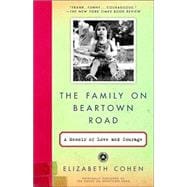
The Family on Beartown Road A Memoir of Love and Courage

by COHEN, ELIZABETH
  • ISBN13:

    9780812966633

  • ISBN10:

    0812966635

  • eBook ISBN(s):

    9780307432193

  • Edition: Reprint
  • Format: Paperback
  • Copyright: 2004-03-09
  • Publisher: Random House Trade Paperbacks
  • Purchase Benefits
  • Free Shipping Icon Free Shipping On Orders Over $35!
    Your order must be $35 or more to qualify for free economy shipping. Bulk sales, PO's, Marketplace items, eBooks and apparel do not qualify for this offer.
  • eCampus.com Logo Get Rewarded for Ordering Your Textbooks! Enroll Now
List Price: $20.00 Save up to $14.01
  • Buy New
    $19.98

    USUALLY SHIPS IN 3-5 BUSINESS DAYS

Summary

Imbued with unquenchable spirit, this true and moving memoir takes readers on a journey through the remarkable landscape that is family.

Author Biography

<b>ELIZABETH COHEN</b> is a reporter and columnist at the <i>Binghamton Press & Sun-Bulletin</i>. She has written for <i>The New York Times, Rolling Stone, Family Circle, Parenting, The New York Times Magazine, Newsweek</i>, and other publications. With Lori Alvord, she is the author of <b>The Scalpel and the Silver Bear</b>. She and her family live in Port Crane, New York.

Table of Contents

Prologue ix
Dream Detection
3(5)
Before
8(8)
The History of Love
16(6)
The Beginning of Memory
22(10)
Whack
32(10)
Luck and Evidence
42(9)
Repeating Dreams
51(10)
The Evaluation
61(11)
The Blue Dot
72(6)
Staying On
78(21)
Home Again
99(9)
The Memory Project
108(14)
Snowplow Angels
122(6)
Naming the Continents
128(10)
Losing and Keeping
138(7)
My Infomercial
145(10)
Word Salad
155(7)
Things, and the Absence of Things
162(12)
A Miracle Passes
174(8)
Ersatz Life
182(17)
No Escape
199(7)
Learning to Wink
206(6)
The Bolivian Incident
212(7)
A Black Thing, and Stars
219(9)
The Forgettery
228(13)
Large-Brained Animals
241(4)
Labor in the United States
245(19)
The Crossing Place
264(5)
Acknowledgments 269(2)
An Interview: Anna Quindlen & Elizabeth Cohen Discuss The Family on Beartown Road 271(8)
Resource Guide for People Caring for Individuals with Alzheimer's Disease 279

Supplemental Materials

What is included with this book?

The New copy of this book will include any supplemental materials advertised. Please check the title of the book to determine if it should include any access cards, study guides, lab manuals, CDs, etc.

The Used, Rental and eBook copies of this book are not guaranteed to include any supplemental materials. Typically, only the book itself is included. This is true even if the title states it includes any access cards, study guides, lab manuals, CDs, etc.

Excerpts

chapter 1

Dream Detection


Sometimes at night I lie awake for hours beside my baby daughter, Ava, cupping her head in my hand. Maybe I am imagining, but sometimes I swear I can feel it: I can feel her dreaming. The sensation upon my fingers is less than a vibration but more than stillness. A something-in-between-nothing-and-something, vague but true. I imagine I can feel my daughter’s mind becoming.

Touching her head in this way comes naturally to me, an instinctual rather than a conscious act. I do it because I am afraid of our circumstances as winter approaches. And because I understand now how delicate a mind is, the many ways in which it can fail a person.

When I was a child, whenever I felt upset, overwhelmed, unsure of my actions or that my thoughts were racing too fast to catch them, I developed the habit of placing my hand on my forehead. It has a calming effect, as though in doing so I can actually slow my mind down, fully possess it, or redirect its course. Just as I touch my daughter’s head, at times when I wake from a particularly vivid dream, I have found myself cupping my own forehead. My hand on my head seems to help me better recall my dreams, as if it is an umbilicus from the sleeping world to waking, a bridge.

Just when I feel my daughter’s dreams begin to swirl inside my palms, she often twitches or smiles or mumbles things that are not quite words but that, judging from her expressions, are sometimes serious, sometimes amusing. That is my favorite thing—when she laughs in her sleep. Never at any time—not when I first held her, wet and new, not when I comforted her when she was teething, not even when I fed her by breast—have I felt as close to my daughter as I do when I touch her dreams.

Down the hall from where we sleep lies my father. I know when he dreams, too, because in his sleep he shouts and whimpers, declares and rages. He begs for my mother. He pleads. He shakes the bed. His dreaming is very busy.

Yet listening to him I have this thought—that if I were to place a hand upon his forehead I would not feel a thing. There would be no subtle almost-vibration, no activity within that brain that once graded reams of undergraduate term papers, lectured about abuses of migratory laborers, charted trends in factory employment and union membership. That mind that once won him a fellowship to Harvard to study industrial relations would be startlingly silent. I fear that touching the forehead of my father, a professor emeritus of economics, I would feel nothing. Rather than signs of a mind’s activity, his dreams seem like echoes of a past intelligence. His voice in the night is a habit, a reflex. He calls out because he can. That is all.

The baby dreaming beside me is acquiring all the cognitive processes that will guide her in life. My father has Alzheimer’s disease; time, place, people, and events all blur and dissemble for him. It has stolen almost all of his connections to life.

Just as I have considered the mechanics of dreaming, I have begun to think about thinking. Thinking about thought is a peculiar experience. When it is someone else’s thought it is mostly conjecture, because no person is privy to that most private space of another. When it is my own thought it is confusing and sometimes scary. I can detect both the strengths and the flaws in my mind, its laziness and gaps and the great trough of forgetting that opens between certain events. And it occurs to me, when I sense this canyon of lost memories snaking through my life, that I hate forgetting. I hate it more than anything—sorrow, indifference, hunger, cold. It takes and takes, a robber who absconds with ideas, names, dates, prized moments, song lyrics, stanzas of poetry, recipes, the punch lines of jokes. It steals what a person truly owns; it takes the life he has lived, leaving him stranded on the island of the present.

Forgetting is my only real enemy. And it is taking my father in fits and starts, in chunks and in slices, stretching out the pain of loss unbearably.

But forgetting lives in our house now like another person. It is always hungry. I go into my husband Shane’s painting studio, where the canvases sing with color and seem so immune to erasure, and I wonder—when will it encroach here? Someday will he forget the way cadmium meshes with black, the lovely moment of approaching a freshly gessoed canvas, the way he spits on his fingers and rubs the chalky color from pastels into a muted shadow on a face?

I watch myself forgetting to pick up toothpaste when I am shopping, forgetting to give my father his medication, forgetting the date, forgetting the capital of Tennessee. It is insidious.

My daughter does not yet know enough to forget. Each thing in her mind is a bright new resident, firmly affixed and special. She remembers where the cookies are, gets excited when I approach the jar. She points at a carton of chocolate milk on the left side of the refrigerator behind the juice. She is just beginning to approach speech; still, she communicates remembering very well. While we are surprised that she can remember so much, she is nonchalant. She has been alive under a year, yet she acts like she has always known these things. For Ava, remembering comes naturally, like a sneeze, a hiccup.

She is learning so fast now that I cannot keep up with all she knows. She is learning her body. Not with words, but locations. Say “nose,” and sometimes, I swear, she points at her nose. Say “tongue” and out hers pops. Did I teach her the location of her tongue? When did I do that? I rack my brain for a recollection of an instance of tongue instruction, but none comes to me. If I did, I have forgotten it. But she hasn’t.

One recent night as I lay beside her, watching her laugh at some secret amusement as she slept, my father walked into the room. He saw me there, touching her head while her subconscious laughter pealed forth. I waited for him to comment, to say something about her laughter, about my hand on her laughter, about her beauty, there on the pillow, a mass of dark curls spread out around her face. Instead he seemed embarrassed, as though he had walked in on a private moment. As though her joyful sleep were something intimate he should not have seen.

“Look,” I said, inviting him into her beauty. “She laughs in her sleep.”

He walked over and glanced down, looking at Ava laughing and sleeping.

“You know,” he said, considering her, “I was thinking about that same thing recently. That funny thing. But now it’s gone.”


From the Hardcover edition.

Excerpted from The Family on Beartown Road: A Memoir of Love and Courage by Elizabeth Cohen
All rights reserved by the original copyright owners. Excerpts are provided for display purposes only and may not be reproduced, reprinted or distributed without the written permission of the publisher.

Rewards Program