 Top
Top
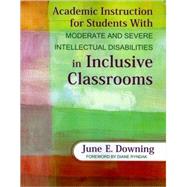
Note: Supplemental materials are not guaranteed with Rental or Used book purchases.
Purchase Benefits
 Free Shipping On Orders Over $35!
 Get Rewarded for Ordering Your Textbooks! Enroll Now
 Customer Reviews Read Reviews
 Write a Review
What is included with this book?
| Foreword | |
| Preface | |
| Acknowledgments | |
| About the Author | |
| Teaching Students With Moderate to Severe Intellectual Disabilities in General Education Classrooms: Foundational Beliefs | |
| Key Concepts | |
| A Historical Perspective: Where We Came From | |
| The Present Situation and Challenge | |
| What is Inclusive Education? | |
| What is Not Inclusive Education | |
| Who Are We Talking About? | |
| Summary | |
| Instructional Strategies and Teaching Arrangements | |
| Key Concepts | |
| Characteristics of Effective Instruction for All Students | |
| Clear Expectations | |
| Analyzing Tasks for Improved Learning | |
| What We Know About Teaching Students with Moderate to Severe Intellectual Disabilities | |
| The Importance of Student Interests | |
| Components of the Teaching Task | |
| Prompting Strategies | |
| Consequences of the Behavior | |
| Using Sequences of Different Prompts to Teach Students: Shaping Behavior | |
| Maintaining and Generalizing Skills | |
| Teaching Arrangements in General Education Classrooms | |
| Summary | |
| Determining Student Needs: What to Teach | |
| Key Concepts | |
| Limitations of Standardized Assessment | |
| Family and Child-Based Assessment Procedure | |
| Record Review | |
| Observational Assessments | |
| What's the Class Doing? | |
| Interpreting Content Standards | |
| Blending Student/Family Goals with State Standards | |
| Identifying Learning Opportunities | |
| Writing IEP Goals and Objectives | |
| Summary | |
| Teaching Core Curriculum to Students With Moderate to Severe Intellectual Disabilities | |
| Key Concepts | |
| The Critical Need to Adapt Curriculum to Make it Meaningful | |
| Identifying the BIG Ideas from Core Curriculum | |
| Determining Prompts to Use for a Particular Student and Lesson | |
| Examples of Students Receiving Direct Instruction Across Grades and Instructional Arrangements | |
| Large Group Instruction | |
| Generalization of Skills Taught | |
| Summary | |
| It Takes a Village: Teaching as a Collaborative Effort | |
| Key Concepts | |
| The Expectation of Team Collaboration | |
| Team Members Involved in Instruction | |
| Credentialed Teachers | |
| Co-Teaching | |
| Supporting General Education Ownership | |
| Paraprofessionals as Teachers | |
| Related Service Providers | |
| Parent Volunteers | |
| Peers as Teachers | |
| A Few Cautions When Using Peers | |
| The Need for Information and Training | |
| Effective Use of Team Members | |
| The Importance of Consistency | |
| Generalization of Skills Across Team Members | |
| Summary | |
| Keeping Track of Student Progress | |
| Key Concepts | |
| Types of Data Collection Strategies | |
| Linking Data Collection Methods to the IEP Objectives | |
| Collecting Data While Teaching in General Education Classrooms | |
| Examples of Collecting Data During Instructional Times | |
| Test Taking by the Class | |
| Training Paraprofessionals and Others to Take Data | |
| The Need for Alternate Assessment | |
| Summary | |
| He's Getting It! Now What? Taking Learning to the Next Level | |
| Key Concepts | |
| Involving the Student in Planning Next Steps | |
| Writing IEP Objectives to Reflect Next Steps | |
| Using Standards and Performance Indicators to Determine Next Steps | |
| Using Task Analyses to Determine Next Steps | |
| Using Life Needs to Determine Next Steps | |
| Postsecondary Options | |
| Next Steps for Nonacademic Skills | |
| Summary | |
| References | |
| Index | |
| Table of Contents provided by Ingram. All Rights Reserved. |
The New copy of this book will include any supplemental materials advertised. Please check the title of the book to determine if it should include any access cards, study guides, lab manuals, CDs, etc.
The Used, Rental and eBook copies of this book are not guaranteed to include any supplemental materials. Typically, only the book itself is included. This is true even if the title states it includes any access cards, study guides, lab manuals, CDs, etc.


Need Help? Copyright © 1999-2024