 Top
Top
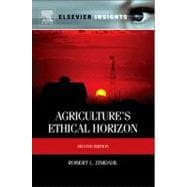
Note: Supplemental materials are not guaranteed with Rental or Used book purchases.
Purchase Benefits
 Free Shipping On Orders Over $35!
 Get Rewarded for Ordering Your Textbooks! Enroll Now
 Customer Reviews Read Reviews
 Write a Review
 Complimentary 7-Day eTextbook Access - Read more
What is included with this book?
| Foreword-First Edition | p. ix |
| Foreword-Second Edition | p. xvii |
| Preface | p. xxi |
| Acknowledgments-First Edition | p. xxxi |
| Acknowledgments-Second Edition | p. xxxiii |
| The Horizon of Agricultural Ethics | p. 1 |
| Scientific Truth and Myth | p. 3 |
| The Conduct of Agricultural Science | p. 15 |
| What Research Ought to Be Done? | p. 23 |
| When Things Go Wrong-Balancing Technology's Safety and Risk | p. 29 |
| The Development of Herbicides | p. 30 |
| Progress of Weed Science | p. 35 |
| Challenges | p. 38 |
| The Continuing Debate | p. 45 |
| A Brief Introduction to Moral Philosophy and Ethical Theories | p. 53 |
| Science and Emotion | p. 55 |
| Universal Values | p. 57 |
| Ethics in Agriculture | p. 59 |
| Contemporary Normative Ethics | p. 61 |
| Ethical Theories Relevant to Agriculture | p. 63 |
| Ethical Egoism | p. 64 |
| Social Contract Theory | p. 65 |
| Virtue Ethics | p. 66 |
| Deontological or Kantian Ethics | p. 68 |
| Utilitarianism | p. 69 |
| Applying Ethics in Agriculture and Agricultural Science | p. 72 |
| Multiple Strategies Utilitarianism | p. 75 |
| Moral Confidence in Agriculture | p. 81 |
| The Benefits and Costs of Modern Agriculture | p. 82 |
| Goals for Agriculture | p. 90 |
| Social Goals for Agriculture | p. 91 |
| Environmental Goals for Agriculture | p. 93 |
| Expanding Agriculture's Moral Scope | p. 97 |
| The Utilitarian Standard | p. 98 |
| The Relevance of the Western Agricultural Model | p. 99 |
| Bottom-line Thinking | p. 100 |
| Sustainability | p. 100 |
| Conclusion | p. 102 |
| The Relevance of Ethics to Agriculture and Weed Science | p. 109 |
| Agricultural Sustainability | p. 121 |
| The Present Agricultural Situation: The Example of Weed Management | p. 124 |
| The Moral Case for Sustainability | p. 132 |
| What is Sustainability? | p. 136 |
| Why must Sustainability be Achieved? | p. 139 |
| A Concluding Comment About Sustainable Weed Science | p. 144 |
| Biotechnology | p. 149 |
| The Debate | p. 150 |
| Technological Problems | p. 152 |
| Regulation | p. 154 |
| Arguments in Favor of Agricultural Biotechnology | p. 157 |
| Arguments Opposed to Agricultural Biotechnology | p. 165 |
| Feeding the World | p. 167 |
| Harm to Human Health | p. 170 |
| Harm to the Environment | p. 172 |
| Transgenic Technology and Sustainable Agricultural Systems | p. 175 |
| The Role of Large Companies | p. 179 |
| The Moral Arguments | p. 180 |
| Labeling and Biotechnology in the US and the EU | p. 181 |
| Effects on Family Farms | p. 184 |
| Academic-Industry Relationships | p. 186 |
| Transgenic Pharming | p. 187 |
| The Precautionary Principle | p. 188 |
| Alternative/Organic Agricultural Systems | p. 197 |
| Characteristics of Alternative/Organic Systems | p. 199 |
| The Farmers and Productivity | p. 200 |
| Transition and Advantages | p. 203 |
| Ethical Problems | p. 206 |
| Animal Agriculture | p. 211 |
| Western Thought and the Line | p. 211 |
| A Person | p. 212 |
| Arguments in Support of Animal Agriculture | p. 215 |
| Arguments Against Animal Agriculture | p. 216 |
| Animal Biotechnology | p. 221 |
| A New Technology | p. 224 |
| A Final Word | p. 225 |
| A Glimpse Ahead | p. 229 |
| Six Important Issues/Problems/Matters of Concern | p. 231 |
| Agricultural Production/Soil Erosion/and Desertification | p. 232 |
| Depletion of Water Resources | p. 234 |
| Climate Change | p. 238 |
| Pollution | p. 239 |
| Loss of Farmers | p. 240 |
| Population | p. 243 |
| Dominant Scientific Myths | p. 243 |
| The Myth of Infinite Benefit | p. 244 |
| The Myth that Science and Scientists are Value Free | p. 245 |
| The Myth of Unfettered Research | p. 246 |
| The Myth of Accountability | p. 247 |
| The Myth of Authoritativeness | p. 247 |
| The Myth of the Endless Frontier | p. 248 |
| Production and Ethics | p. 248 |
| The Imperative of Responsibility | p. 250 |
| Finding Partners | p. 253 |
| Mission Statements | p. 255 |
| The Role of the University | p. 259 |
| Sustainability as a Goal | p. 263 |
| Conclusion | p. 269 |
| Table of Contents provided by Ingram. All Rights Reserved. |
The New copy of this book will include any supplemental materials advertised. Please check the title of the book to determine if it should include any access cards, study guides, lab manuals, CDs, etc.
The Used, Rental and eBook copies of this book are not guaranteed to include any supplemental materials. Typically, only the book itself is included. This is true even if the title states it includes any access cards, study guides, lab manuals, CDs, etc.


Need Help? Copyright © 1999-2024