
• RETURN YOUR RENTAL
  • SIGN IN TO YOUR ACCOUNT
  • MARKETPLACE
  • HELP DESK
CART

(0) items

FREE SHIPPING on orders over $59!
Details.
Cheap Textbooks | Used Textbooks | Textbook Rental | Sell Textbooks | eTextbooks
  • Rent
    Textbooks
  •  
  • Buy
    Textbooks
  •  
  • Sell
    Textbooks
  •  
  • eTextbooks
  •  
  • Books
  •  
  • College Clothing
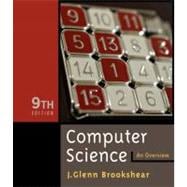
Computer Science : An Overview,9780321387011

Computer Science : An Overview

by Brookshear, J. Glenn
Edition:
10th
ISBN13:

9780321387011

ISBN10:
0321387015
Format:
Paperback
Pub. Date:
1/1/2009
Publisher(s):
Addison Wesley
Upgraded Edition: Click here!
  • Other versions by this Author
List Price: $115.00

Rent Textbook

(Recommended)
 
Term
Due
Price
Short Term
Aug 2
$9.84
Semester
Sep 29
$57.50
Quarter
Aug 20
$51.75
Due back on
$9.84

Buy Used Textbook

In Stock Usually Ships in 24 Hours.
$14.61

eTextbook

We're Sorry
Not Available

New Textbook

We're Sorry
Sold Out

More New and Used
from Private Sellers
Starting at $0.01

Questions About This Book?

Why should I rent this book?
Renting is easy, fast, and cheap! Renting from eCampus.com can save you hundreds of dollars compared to the cost of new or used books each semester. At the end of the semester, simply ship the book back to us with a free UPS shipping label! No need to worry about selling it back.
How do rental returns work?
Returning books is as easy as possible. As your rental due date approaches, we will email you several courtesy reminders. When you are ready to return, you can print a free UPS shipping label from our website at any time. Then, just return the book to your UPS driver or any staffed UPS location. You can even use the same box we shipped it in!
What version or edition is this?
This is the 10th edition with a publication date of 1/1/2009.
What is included with this book?
  • The Used copy of this book is not guaranteed to inclue any supplemental materials. Typically, only the book itself is included.
  • The Rental copy of this book is not guaranteed to include any supplemental materials. You may receive a brand new copy, but typically, only the book itself.

Summary

Introduction to Computer Science Computer Science: An Overview, Ninth Edition J. Glenn Brookshear, Marquette University Do you want your students to gain a fundamental understanding of the field of computer science? Would you like them to be excited by the opportunities computing presents for further studies and future careers? Computer Science: An Overview delivers a foundational framework of what computer science is all about. Each topic is presented with a historical perspective, its current state, and its future potential, as well as ethical issues for students to consider. This balanced, realistic picture helps students see that their future success depends on a solid overview in the rapidly changing field of computer science. Features: A language-independent introduction to computer science that uses C#, C++, and JavaTM as example languages. More than 1,000 Questions/Exercises, Chapter Review Problems, and Social Issues questions that give students the opportunity to apply the concepts as they learn them. Discussion of ethical and legal aspects of areas such as Internet security, software engineering, and database technology that brings to light the things students should know to be safe and responsible users of technology. A Companion Website that includes practical exploration of topics from the text, software simulators, and more. Available at aw.com/brookshear. Check the front of the book for the access code that opens up the Companion Website and the valuable student resources for this book. Six-month access is included with all new books.

Table of Contents

*Asterisks indicate suggestions for optional sections.
Chapter 0 Introduction 1(18)
0.1 The Role of Algorithms
2(2)
0.2 The Origins of Computing Machines
4(5)
0.3 The Science of Algorithms
9(1)
0.4 Abstraction
10(1)
0.5 An Outline of Our Study
11(2)
0.6 Social Repercussions
13(6)
Chapter 1 Data Storage 19(60)
1.1 Bits and Their Storage
20(7)
1.2 Main Memory
27(3)
1.3 Mass Storage
30(7)
1.4 Representing Information as Bit Patterns
37(7)
*1.5 The Binary System
44(5)
*1.6 Storing Integers
49(7)
*1.7 Storing Fractions
56(5)
*1.8 Data Compression
61(5)
*1.9 Communication Errors
66(13)
Chapter 2 Data Manipulation 79(40)
2.1 Computer Architecture
80(3)
2.2 Machine Language
83(6)
2.3 Program Execution
89(8)
*2.4 Arithmetic/Logic Instructions
97(5)
*2.5 Communicating with Other Devices
102(5)
*2.6 Other Architectures
107(12)
Chapter 3 Operating Systems 119(28)
3.1 The History of Operating Systems
120(4)
3.2 Operating System Architecture
124(7)
3.3 Coordinating the Machine's Activities
131(3)
*3.4 Handling Competition Among Processes
134(5)
3.5 Security
139(8)
Chapter 4 Networking and the Internet 147(48)
4.1 Network Fundamentals
148(9)
4.2 The Internet
157(7)
4.3 The World Wide Web
164(10)
*4.4 Internet Protocols
174(6)
4.5 Security
180(15)
Chapter 5 Algorithms 195(56)
5.1 The Concept of an Algorithm
196(3)
5.2 Algorithm Representation
199(8)
5.3 Algorithm Discovery
207(6)
5.4 Iterative Structures
213(11)
5.5 Recursive Structures
224(9)
5.6 Efficiency and Correctness
233(18)
Chapter 6 Programming Languages 251(60)
6.1 Historical Perspective
252(9)
6.2 Traditional Programming Concepts
261(11)
6.3 Procedural Units
272(8)
6.4 Language Implementation
280(9)
*6.5 Object-Oriented Programming
289(6)
*6.6 Programming Concurrent Activities
295(3)
*6.7 Declarative Programming
298(13)
Chapter 7 Software Engineering 311(38)
7.1 The Software Engineering Discipline
312(3)
7.2 The Software Life Cycle
315(4)
7.3 Software Engineering Methodologies
319(2)
7.4 Modularity
321(7)
7.5 Tools of the Trade
328(8)
7.6 Testing
336(2)
7.7 Documentation
338(1)
7.8 Software Ownership and Liability
339(10)
Chapter 8 Data Abstractions 349(42)
8.1 Data Structure Fundamentals
350(5)
8.2 Implementing Data Structures
355(15)
8.3 A Short Case Study
370(5)
8.4 Customized Data Types
375(4)
*8.5 Classes and Objects
379(2)
*8.6 Pointers in Machine Language
381(10)
Chapter 9 Database Systems 391(44)
9.1 Database Fundamentals
392(5)
9.2 The Relational Model
397(11)
*9.3 Object-Oriented Databases
408(3)
*9.4 Maintaining Database Integrity
411(3)
*9.5 Traditional File Structures
414(9)
9.6 Data Mining
423(2)
9.7 Social Impact of Database Technology
425(10)
Chapter 10 Artificial Intelligence 435(50)
10.1 Intelligence and Machines
436(5)
10.2 Perception
441(6)
10.3 Reasoning
447(13)
10.4 Additional Areas of Research
460(4)
10.5 Artificial Neural Networks
464(9)
10.6 Robotics
473(2)
10.7 Considering the Consequences
475(10)
Chapter 11 Theory of Computation 485(40)
11.1 Functions and Their Computation
486(2)
11.2 Miring Machines
488(5)
11.3 Universal Programming Languages
493(6)
11.4 A Noncomputable Function
499(5)
11.5 Complexity of Problems
504(9)
*11.6 Public-Key Cryptography
513(12)
Appendixes 525(60)
A ASCII
527(2)
B Circuits to Manipulate Thro's Complement Representations
529(4)
C A Simple Machine Language
533(2)
D High-Level Language Program Examples
535(8)
E The Equivalence of Iterative and Recursive Structures
543(2)
F Answers to Questions Exercises
545(40)
Index 585


Please wait while the item is added to your cart...
Online Bookstore | VeriSign Service
  • Affiliate Program
  • Browse Book Categories
  • Bulk Orders
  • Buy Textbooks
  • Careers
  • College Clothing
  • Contact Us
  • eCampus Blog
  • eCampus Coupons
  • Gift Certificates
  • Help Desk
  • Link to Us
  • Marketplace
  • Media
  • Order Status
  • Our Bookstores
  • Press
  • Rent Textbooks
  • Return Policy
  • Sell Textbooks
  • Shipping
  • Site Map
  • Terms & Conditions
  • Virtual Bookstores
Hacker Safe Certified Site

Need Help?

Copyright © 1999-2013

  • PayPal