 Top
Top
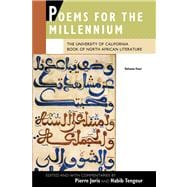
Note: Supplemental materials are not guaranteed with Rental or Used book purchases.
Purchase Benefits
 Free Shipping On Orders Over $35!
 Get Rewarded for Ordering Your Textbooks! Enroll Now
 Customer Reviews Read Reviews
 Write a Review
What is included with this book?
| Thanks and Acknowledgments | |
| Introduction | |
| A Book of Multiple Beginnings | |
| Prologue | |
| The First Human Beings, Their Sons and Amazon Daughters | |
| Hanno the Navigator (Carthage, c. sixth century B.C.E.) | |
| from The Periplos of Hanno | |
| Callimachus (Cyrene, 310-c. 240 B.C.E.) | |
| Thirteen Epigrammatic Poems | |
| Mago (Carthage, pre-second century B.C.E.) | |
| from De Agricultura | |
| Lucius Apuleius (Madaurus, now M'Daourouch, c. 123-c. 180 C.E.) | |
| from The Golden Ass, or Metamorphoses | |
| Quintus Septimius Florens Tertullianus (Carthage, c. 160-c. 220 C.E.) | |
| from De Pallio (The Cloak) | |
| from Scorpiace (The Scorpion) | |
| Thascius Caecilius Cyprianus (Carthage, early third century-258 C.E.) | |
| from Epistle to Donatus | |
| Lucius Lactantius (Cirta?, c. 240-Trier?, c. 320 C.E.) | |
| from De Ave Phoenice | |
| Aurelius Augustinus Hipponensis (Saint Augustine) (Thagaste, 354-Hippo, 430 C.E.) | |
| from Confessions | |
| from De Doctrina Christiana | |
| from De fide rerum invisibilium | |
| from Psalmus contra Partem Donati | |
| Blossius Aemilius Dracontius (Carthage, c. 455-c. 505 C.E.) | |
| The Chariot of Venus | |
| De Mensibus (Months) | |
| The Origin of Roses | |
| Luxorius (Carthage, sixth century C.E.) | |
| [They say, that when the fierce bear gives birth . . .] | |
| Premature Chariot | |
| First Diwan | |
| A Book of In-Betweens: Al-Andalus, Sicily, the Maghreb | |
| Prologue | |
| Anonymous Muwashshaha | |
| Some Kharjas | |
| Ibn Hani al-Andalusi (Seville, c. 934-Barca, Libya, 973) | |
| Al-Jilnar | |
| Extinction Is the Truth . . . | |
| Ibn Darradj al-Qastalli (958-1030) | |
| from Ode in Praise of Khairan al-'Amiri, Emir of Almería | |
| from Ode in Praise of al-Mansur al-'Amiri, Emir of Córdoba | |
| Abu Amir Ibn Shuhayd (Córdoba, 992-1035) | |
| from Qasida (I) | |
| Córdoba | |
| from Qasida (II) | |
| "As he got his fill of delirious wine" | |
| Gravestone Qasida | |
| Yusuf ibn Harun al-Ramadi (d. c. 1022) | |
| Hugging Letters and Beauty Spots | |
| Silver Breast | |
| Gold Nails | |
| The Swallow | |
| O Rose . . . | |
| Yosef ibn Abitur (mid-tenth century-c. 1012) | |
| The "Who?" of Ibn Abitur of Córdoba | |
| Hafsa bint Hamdun (Wadi al-Hijara, now Guadalajara, tenth century) | |
| Four Poems | |
| Samuel Ha-Levi ibn Nagrella, called ha-Nagid, "the Prince" (Merida, 993-Granada, 1055) | |
| Three Love Poems | |
| War Poem | |
| Ibn Hazm (Córdoba, 994-Niebla, 1064) | |
| My Heart | |
| from The Neck-Ring of the Dove | |
| FROM "AUTHOR'S PREFACE" | |
| OF FALLING IN LOVE WHILE ASLEEP | |
| Wallada bint al-Mustakfi (Córdoba, 994-1091) | |
| Six Poems | |
| Ibn Rashiq (Masila, Algeria, c. 1-Mazara, Sicily, c. 1064) | |
| from Lament over the Fall of the City of Kairouan | |
| Ibn Zaydun (Córdoba, 1003-1071) | |
| Fragments from the Qasida in the Rhyme of Nun | |
| Written from al-Zahra' | |
| Salomon ibn Gabirol (Malaga, c. 1020-Valencia, c. 1058) | |
| The 16-Year-Old Poet | |
| from The Crown of Kingdom | |
| Al Mu'tamid ibn Abbad (Seville, 1040-Aghmat, 1095) | |
| To Abu Bakr ibn 'Ammar Going to Silves | |
| To Rumaykiyya | |
| Ibn Hamdis (Noto, Sicily, 1056-Majorca, 1133) | |
| He Said, Remembering Sicily and His Home, Syracuse | |
| Ibn Labbana (Benissa, mid-eleventh century-Majorca, 1113) | |
| Al-Mu'tamid and His Family Go into Exile | |
| Two Muwashshahat | |
| Moses ibn Ezra (Granada, c. 1058-c. 1135) | |
| Drinking Song | |
| Song | |
| Al-A'ma al-Tutili (b. Tudela, c. late eleventh century-d. 1126) | |
| Water-Fire Muwashshaha | |
| Ibn Khafadja (Alcita, province of Valencia, 1058-1138) | |
| The River | |
| Yehuda Halevi, the Cantor of Zion (Toledo, 1075-Cairo, 1141) | |
| from Yehuda Halevi's Songs to Zion | |
| The Garden | |
| Ibn Quzman (Córdoba, 1078-1160) | |
| [A muwashshaha] | |
| The Crow | |
| Abraham ibn Ezra (1089-1164) | |
| "I have a garment" | |
| Abu Madyan Shu'ayb (Sidi Boumedienne) (Cantillana, 1126-Tlemcen, 1198) | |
| You Will Be Served in Your Glass | |
| Hafsa bint al-Hajj Arrakuniyya (Granada, 1135-Marrakech, 1190) | |
| Eight Poems | |
| Ibn Arabi, al-Sheikh al-Akhbar (Murcia, 1165-Damascus, 1240) | |
| "I | |
| Table of Contents provided by Publisher. All Rights Reserved. |
The New copy of this book will include any supplemental materials advertised. Please check the title of the book to determine if it should include any access cards, study guides, lab manuals, CDs, etc.
The Used, Rental and eBook copies of this book are not guaranteed to include any supplemental materials. Typically, only the book itself is included. This is true even if the title states it includes any access cards, study guides, lab manuals, CDs, etc.


Need Help? Copyright © 1999-2024