 Top
Top
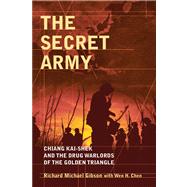
Note: Supplemental materials are not guaranteed with Rental or Used book purchases.
Purchase Benefits
 Free Shipping On Orders Over $35!
 Get Rewarded for Ordering Your Textbooks! Enroll Now
 Customer Reviews Read Reviews
 Write a Review
What is included with this book?
Richard M. Gibson earned a BS in 1965 and in 1966 an MA in history at San Jose State College, San Jose, California. As a Naval officer from 1966-71, he served aboard ships in the Gulf of Tonkin and taught history at the US Naval Academy, Annapolis, MD.
In 1971, Gibson joined the US Department of State as a Foreign Service Officer. His postings included Martinique, French West Indies, Burma and Japan. He speaks French, Thai, and Japanese fluently, and received the Department of States meritorious and superior honor awards.
Wen-hua Chen earned a BA in Chinese literature from Tunghai University, Taiwan and an MA in oriental history at Hiroshima University, Japan. Chen also studied at Taiwan’s prestigious Academia Sinica. In 1975, he began a career with the United Nations as a Chinese translator, working in both Bangkok, Thailand, and at UN Headquarters in New York. He retired in 2000 and has been pursuing various writing projects, publishing several works in Chinese language periodicals in Taiwan, Hong Kong, and the United Kingdom.
| Introduction: Two Young Chinese Soldiers | p. vii |
| Glossary of Key Players | p. xiii |
| List of Abbreviations | p. xvii |
| Retreat from Yunnan | p. 1 |
| Sorting Things Out in Tachilek | p. 15 |
| Lieutenant General Li Mi | p. 29 |
| Li Mi and His American Friends | p. 45 |
| Li Mi's Yunnan Anticommunist National Salvation Army | p. 57 |
| Attacking Yunnan | p. 69 |
| Washington Opts Out | p. 87 |
| Li Mi's Army Settles into Burma | p. 97 |
| Washington Cuts Its Losses | p. 113 |
| Southern Strategy and Karen Allies | p. 121 |
| The Road to the United Nations | p. 131 |
| The United Nations vs. KMT Duplicity | p. 139 |
| First Evacuation from Burma | p. 153 |
| Liu Yuan-lin's Yunnan Anticommunist Volunteer Army | p. 165 |
| A Resurgent KMT | p. 181 |
| Operation Mekong: Sino- Burmese Forces Rout the KMT | p. 191 |
| Air Battle Over Burma and American Weapons | p. 205 |
| The Second KMT Evacuation | p. 213 |
| Removing KMT Remnants from Laos | p. 225 |
| Nationalist Chinese Armies in Thailand | p. 235 |
| Thailand's Troublesome Guests | p. 251 |
| Intelligence Bureau of the Ministry of National Defense | p. 265 |
| Resettlement in Thailand | p. 281 |
| Soldiering on for Thailand | p. 293 |
| Postscript | p. 305 |
| Bibliography | p. 309 |
| Index | p. 329 |
| Table of Contents provided by Ingram. All Rights Reserved. |
The New copy of this book will include any supplemental materials advertised. Please check the title of the book to determine if it should include any access cards, study guides, lab manuals, CDs, etc.
The Used, Rental and eBook copies of this book are not guaranteed to include any supplemental materials. Typically, only the book itself is included. This is true even if the title states it includes any access cards, study guides, lab manuals, CDs, etc.


Need Help? Copyright © 1999-2024