
rent-now

Rent More, Save More! Use code: ECRENTAL

5% off 1 book, 7% off 2 books, 10% off 3+ books

9780821354650

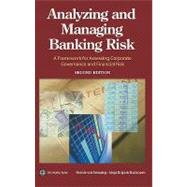
Analyzing and Managing Banking Risk : A Framework for Assessing Corporate Governance and Financial Risk

by Van Greuning, Hennie; Bratanovic, Sonja Brajovic
  • ISBN13:

    9780821354650

  • ISBN10:

    0821354655

  • Edition: 2nd
  • Format: Hardcover
  • Copyright: 2003-04-01
  • Publisher: World Bank

Note: Supplemental materials are not guaranteed with Rental or Used book purchases.

Purchase Benefits

List Price: $100.00 Save up to $25.00
  • Rent Book $75.00
    Add to Cart Free Shipping Icon Free Shipping

    TERM
    PRICE
    DUE
    IN STOCK USUALLY SHIPS IN 24-48 HOURS
    *This item is part of an exclusive publisher rental program and requires an additional convenience fee. This fee will be reflected in the shopping cart.

How To: Textbook Rental

Looking to rent a book? Rent Analyzing and Managing Banking Risk : A Framework for Assessing Corporate Governance and Financial Risk [ISBN: 9780821354650] for the semester, quarter, and short term or search our site for other textbooks by Van Greuning, Hennie; Bratanovic, Sonja Brajovic. Renting a textbook can save you up to 90% from the cost of buying.

Summary

'Analyzing Banking Risk (2nd edition)' provides a comprehensive overview of topics dealing with the assessment, analysis, and management of financial risks in banking. This book focuses on risk-management principles and stresses that key players in the corporate governance process are accountable for managing the different dimensions of financial risk.This second edition remains faithful to the objectives of the original publication ('Analyzing Banking Risk'). A significant new addition is the inclusion of chapters on the management of the treasury function and management of a stable liquidity investment portfolio. New material also consists of a discussion of proprietary trading activities and asset management liability components.Chapters include:- Organization of the Treasury Function- Investment/Stable Portfolio Management- Proprietary Trading/Market Risk Management- Asset-Liability Management Components- Key Players in the Corporate Governance and Risk Management Process- Transparency in the Financial Statements of BanksManaging the risks associated with the banking industry today has become more difficult. The approach used in this publication provides a framework for identifying the key players in the risk-management process and discussing their accountability for the various dimensions of the financial and other risk management processes.The hardcover edition includes a CD-ROM.

Author Biography

Sonja Brajovic Bratanovic is a senior financial sector specialist in the World Bank. Hennie van Greuning is currently a Senior Adviser in the World Bank's Treasury and has previously worked as a sector manager for financial sector operations in the Bank.

Table of Contents

Foreword to the Second Edition xiii
Acknowledgments xv
Analyzing and Managing Banking Risk
1(14)
Introduction: The Changing Bank Environment
1(2)
Bank Exposure to Risk
3(2)
Corporate Governance
5(3)
Risk-Based Analysis of Banks
8(3)
Analytical Tools Provided
11(4)
A Context for the Risk-Based Review of Banks
15(16)
Introduction: Why Banks Are Analyzed
15(2)
Banks as Providers of Financial Information
17(1)
A Framework for Financial Sector Development
18(6)
A Holistic View of the Entire Financial System
24(3)
Disclosure and Transparency of Bank Financial Information: A Prerequisite for Risk-Based Analysis
27(4)
Key Players in the Corporate Governance and Risk Management Process
31(28)
Introduction: Corporate Governance Principles
31(2)
Regulatory Authorities: Establishing a Corporate Governance and Risk Management Framework
33(2)
Supervisory Authorities: Monitoring Risk Management
35(3)
The Shareholders: Appointing the Right Policymakers
38(2)
The Board of Directors: Ultimate Responsibility for a Bank's Affairs
40(6)
Management: Responsibility for Bank Operations and the Implementation of Risk Management Policies
46(5)
The Audit Committee and Internal Auditors: An Extension of the Board's Risk Management Function
51(2)
External Auditors: A Reassessment of the Traditional Approach of Auditing Banks
53(3)
The Role of the General Public
56(3)
Balance Sheet Structure and Management
59(22)
Introduction: Composition of the Balance Sheet
59(3)
Asset Structure: Growth and Changes
62(5)
Liabilities Structure: Growth and Changes
67(5)
Overall On- and Off-Balance-Sheet Growth
72(4)
Managing Risk Effectively
76(5)
Profitability
81(20)
Introduction: The Importance of Profitable Banks
81(2)
Income Statement Composition
83(6)
Income Structure and Profit Quality
89(7)
Profitability Indicators
96(1)
Profitability Ratio Analysis
97(4)
Capital Adequacy
101(34)
Introduction: The Characteristics and Functions of Capital
102(2)
Constituents of Regulatory Capital (Current Methodology)
104(4)
Coverage of Risk Components by Constituents of Capital (Current Methodology)
108(5)
Basel II: Proposed Changes for Determining Capital Adequacy
113(8)
Implementation of the Basel Accord
121(2)
Assessing Management Information with Respect to Capital Adequacy
123(7)
Annex to Chapter 6
130(5)
Credit Risk Management
135(32)
Introduction: Components of Credit Risk
135(1)
Credit Portfolio Management
136(4)
Review of Lending Function and Operations
140(2)
Credit Portfolio Quality Review
142(4)
Nonperforming Loan Portfolio
146(5)
Credit Risk Management Policies
151(3)
Policies to Limit or Reduce Credit Risk
154(5)
Asset Classification
159(5)
Loan Loss Provisioning Policy
164(3)
Liquidity Risk Management
167(22)
Introduction: The Need for Liquidity
167(2)
Liquidity Management Policies
169(3)
The Regulatory Environment
172(3)
The Structure of Funding: Deposits and Market Borrowing
175(2)
Maturity Structure and Funding Mismatches
177(4)
Deposit Concentration and Volatility of Funding
181(1)
Liquidity Risk Management Techniques
182(7)
Treasury Organization and Risk Management
189(32)
Introduction: Overview of Treasury Functions
189(3)
Establishing the Overall Policy Framework
192(7)
Market Operations
199(2)
Risk Analytics and Compliance
201(6)
Treasury Operations
207(6)
Corporate Governance and Operational Risk Assessment
213(8)
Management of the Stable Liquidity Investment Portfolio
221(10)
Nature of the Stable Liquidity Investment Portfolio
221(2)
Investment Policy
223(1)
Eligible Instruments
224(1)
Credit Risk
224(1)
Market Risk
225(1)
Benchmark Portfolio
225(2)
Active Management
227(1)
Risk Management and Risk Budgets
228(1)
Management Reporting
229(2)
Market Risk Management and Proprietary Trading
231(18)
Introduction: Market Risk Characteristics
231(3)
Portfolio Risk Management Policies
234(3)
Trading Book and Management of Trading Activities
237(3)
Market Risk Measurement
240(4)
Value at Risk
244(2)
Stress Testing
246(3)
Interest Rate Risk Management
249(12)
Introduction: Sources of Interest Rate Risk
249(3)
Risk Management Responsibilities
252(1)
Models for the Management of Interest Rate Risk
253(5)
The Impact of Changes in Forecast Yield Curves
258(3)
Currency Risk Management
261(20)
Introduction: Origin and Components of Currency Risk
261(2)
Policies for Currency Risk Management
263(7)
Currency Risk Exposure and Business Strategy
270(4)
Currency Risk Management and Capital Adequacy
274(7)
Transparency in the Financial Statements of Banks
281(16)
Introduction: The Importance of Useful Information
281(2)
Transparency and Accountability
283(2)
Transparency in Financial Statements
285(5)
Disclosure in the Financial Statements of Banks
290(3)
Deficiencies Found in Bank Accounting Practices
293(4)
The Relationship between Risk Analysis and Bank Supervision
297(1)
Introduction: The Bank Supervisory Process
297(1)
The Analytical Review Process
298(6)
Banking Risks and the Accountability of Regulatory/Supervisory Authorities
304(3)
The Supervisory Process
307(7)
Consolidated Supervision
314(5)
Supervisory Cooperation with Internal and External Auditors
319(4)
Appendixes
1 Background Questionnaire to Facilitate Analysis of Banks
323(36)
2 IAS-Required Disclosure in Financial Statements, by Risk Category
359(6)
3 Deficiencies Found in Accounting Practices
365

Supplemental Materials

What is included with this book?

The New copy of this book will include any supplemental materials advertised. Please check the title of the book to determine if it should include any access cards, study guides, lab manuals, CDs, etc.

The Used, Rental and eBook copies of this book are not guaranteed to include any supplemental materials. Typically, only the book itself is included. This is true even if the title states it includes any access cards, study guides, lab manuals, CDs, etc.

Rewards Program