

rent-now

Rent More, Save More! Use code: ECRENTAL

5% off 1 book, 7% off 2 books, 10% off 3+ books

9781433841637

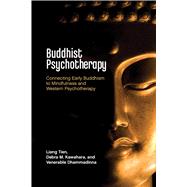
Buddhist Psychotherapy Connecting Early Buddhism to Mindfulness and Western Psychotherapy

by Tien, Liang; Kawahara, Debra M.; Dhammadinna, Venerable
  • ISBN13:

    9781433841637

  • ISBN10:

    1433841630

  • eBook ISBN(s):

    9781433841644

  • Format: Paperback
  • Copyright: 2025-09-23
  • Publisher: American Psychological Association

Note: Supplemental materials are not guaranteed with Rental or Used book purchases.

Purchase Benefits

List Price: $42.65 Save up to $17.06
  • Rent Book $25.59
    Add to Cart Free Shipping Icon Free Shipping

    TERM
    PRICE
    DUE
    USUALLY SHIPS IN 3-5 BUSINESS DAYS
    *This item is part of an exclusive publisher rental program and requires an additional convenience fee. This fee will be reflected in the shopping cart.

How To: Textbook Rental

Looking to rent a book? Rent Buddhist Psychotherapy Connecting Early Buddhism to Mindfulness and Western Psychotherapy [ISBN: 9781433841637] for the semester, quarter, and short term or search our site for other textbooks by Tien, Liang; Kawahara, Debra M.; Dhammadinna, Venerable. Renting a textbook can save you up to 90% from the cost of buying.

Summary

A rich resource enabling therapists to bring Buddhist philosophy to modern psychotherapy.
 
Mindfulness‑based interventions have become popular mental health treatments in recent years, but these interventions are typically applied by practitioners who lack knowledge of the interventions’ Buddhist origins. The historical, religious, and philosophical foundations of mindfulness offer essential insights for clinicians and researchers alike.
 
This book, a collaboration between two practicing psychologists and an ordained Buddhist nun, examines the early Buddhist philosophical roots of mindfulness and provides a model for modern psychotherapy. In Buddhist psychotherapy, the therapist listens to a client discuss their concerns, considers how the client’s suffering can be conceptualized from a Buddhist worldview, and uses mindfulness and other techniques taught by the Buddha to address the source of their suffering. This framework does not rely on any specific spiritual belief, but instead seeks to alleviate client suffering in a world where everything is ultimately impermanent and impersonal.
 
Amply illustrated with quotes from early Buddhist literature as well as modern clinical examples, this rich volume will help modern psychotherapists deepen their understanding of mindfulness and enrich their practice.

Author Biography

Dr. Liang Tien (Tien) is a retired Professor from the California School of Professional Psychology PsyD Program – Hong Kong. Since retirement, she has studied for a PhD in Buddhist Studies at the University of Kelaniya, Sri Lanka, and is a co-founder of the Illumination of Mindfulness Institute at Alliant International University. She is a long-time meditator. As a licensed clinical psychologist, her independent practice focuses on individuals with ancestry from Asian Buddhist-based countries and woman with histories of abuse. Her research interest has been in ethics and immigrant acculturation.  

Dr. Debra M. Kawahara is the Associate Dean of Academic Affairs and Distinguished Professor at the California School of Professional Psychology, Alliant International University. She is the 2025 American Psychological Association President. As a licensed clinical psychologist, her independent practice focuses on psychotherapy with individuals, couples, and families, as well as consulting and conducting trainings to organizations. Further, Dr. Kawahara is a multicultural feminist scholar whose work centers on intersectionality, Buddhist psychotherapy, women’s issues, leadership, and the application of multicultural, feminist, and social justice principles in practice. She is widely published and has presented nationally and globally.

Ven. Dhammadinna took robes in 1983 at the age of 25. From 1985 until 2006 she studied under several esteemed meditation teachers in Southeast Asia and India, namely Ven. U Pandita Sayadaw, Dipama Barua, Ajahn Buddhadasa, Ajahn Sumedho, and His Holiness the Dalai Lama. She began teaching retreats in 1989. In 2006 she accepted an invitation to return to the States and is a resident teacher at Bodhiheart Sangha Buddhist Meditation Center. Visit https://bodhiheart.wpcomstaging.com.

Table of Contents

Prologue: Our Background and Interest in Linking Buddhism with Psychotherapy
Introduction: Buddhist Psychotherapy Versus Buddhism the Religion
Chapter 1. Background on the Buddha and Early Buddhist Texts
I. Origins of Suffering
Chapter 2. The Five Aggregates of Self: Parts of a Person 
Chapter 3. How the Five Aggregates Work Together: Human Awareness of Existence 
Chapter 4. Five-Aggregates-Subject-to-Clinging: How We Experience Existence Through the Constructed Notion of Self 
II. Manifestations of Suffering and Their Remedy
Chapter 5. Dukkha Defined 
Chapter 6. The First Dukkha: Suffering Due to Birth, Aging, and Death 
Chapter 7. The Second Dukkha: Suffering Due to Situational Change 
Chapter 8. The Third Dukkha: Suffering Due to Mental Formations 
Chapter 9. The Fourth Dukkha: Suffering Due to the Notion of a Self 
Chapter 10. How We Try to Escape Suffering: The Hindrances 
III. Clinical Implications
Chapter 11. Assessment 
Chapter 12. Addressing Ethical Conduct in Therapy 
Chapter 13. Addressing Concentration in Therapy: The Foundations of Mindfulness 
Chapter 14. Advanced Mindfulness in Therapy: What to Contemplate in Meditation and Why 
Chapter 15. Addressing Wisdom in Therapy 
Chapter 16. Three Arenas for Intervention in Buddhist Psychotherapy: A Model and Case Examples 
Afterword: Future Directions for Buddhist Psychotherapy
Glossary of Pali Terms
References

Supplemental Materials

What is included with this book?

The New copy of this book will include any supplemental materials advertised. Please check the title of the book to determine if it should include any access cards, study guides, lab manuals, CDs, etc.

The Used, Rental and eBook copies of this book are not guaranteed to include any supplemental materials. Typically, only the book itself is included. This is true even if the title states it includes any access cards, study guides, lab manuals, CDs, etc.

Rewards Program