
rent-now

Rent More, Save More! Use code: ECRENTAL

5% off 1 book, 7% off 2 books, 10% off 3+ books

9780813390796

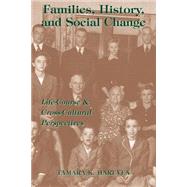
Families, History And Social Change: Life Course And Cross-cultural Perspectives

by Hareven,Tamara K
  • ISBN13:

    9780813390796

  • ISBN10:

    0813390796

  • eBook ISBN(s):

    9780429980206

  • Format: Nonspecific Binding
  • Copyright: 1999-12-03
  • Publisher: Routledge

Note: Supplemental materials are not guaranteed with Rental or Used book purchases.

Purchase Benefits

List Price: $53.95 Save up to $17.54
  • Rent Book $36.41
    Add to Cart Free Shipping Icon Free Shipping

    TERM
    PRICE
    DUE
    USUALLY SHIPS IN 3-5 BUSINESS DAYS
    *This item is part of an exclusive publisher rental program and requires an additional convenience fee. This fee will be reflected in the shopping cart.

How To: Textbook Rental

Looking to rent a book? Rent Families, History And Social Change: Life Course And Cross-cultural Perspectives [ISBN: 9780813390796] for the semester, quarter, and short term or search our site for other textbooks by Hareven,Tamara K. Renting a textbook can save you up to 90% from the cost of buying.

Summary

One of the prevailing myths about the American family is that there once existed a harmonious family with three generations living together, and that this "ideal" family broke down under the impact of urbanization and industrialization. The essays inFamilies, History, and Social Changechallenge this myth and provide dramatic revisions of simplistic notions about change in the American family. In these interdisciplinary essays that are deeply rooted in history, Hareven provides important perspectives on family relations in the present, dispels myths about family relations in the past, offers new directions in research and interpretation, and revises our understanding of social change. Hareven's essays, which are based on thirty years of research, combine empirical evidence with theoretical frameworks and discussions of the state of the art in this exciting field. The essays cover a wide spectrum of issues and topics such as the organization of the family and the household, the networks available to children as they were growing up, the role of the family in the process of industrialization, the division of labor in the family along gender lines, and the relations between the generations in the later years of life. Coincidentally, the essays revolve around three central themes: The family's interaction with the process of industrialization, the life course, and the development of the field of family history--and its future directions. They are both interdisciplinary and cross-cultural.Professor Hareven is a pioneer and leader in the development of the field of family history. Her work makes a major contribution to the theoretical and substantive aspects of scholarship on family life, past and present, and on social change. Her essays also provide a fine understanding of this field's development.

Author Biography

Tamara K. Hareven is Unidel Professor of Family Studies at the University of Delaware. Dr. Hareven is the founder of the Journal of Family History, for which she served as editor for two decades. She is also the founder of The History of the Family: An International Quarterly, which she coedits with Dr. Andrejs Plakans. She is author of several books and numerous articles and has edited collections in the history of the family, work and family, the life course, and aging. Her best known book is Family Time and Industrial Time. Tamara K. Hareven is Unidel Professor of Family Studies at the University of Delaware. Dr. Hareven is the founder of the Journal of Family History, for which she served as editor for two decades. She is also the founder of The History of the Family: An International Quarterly, which she coedits with Dr. Andrejs Plakans. She is author of several books and numerous articles and has edited collections in the history of the family, work and family, the life course, and aging. Her best known book is Family Time and Industrial Time.

Table of Contents

List of Tables and Figures
xiii
Preface xv
Acknowledgments xxv
Part 1 Family and Kinship: Continuity and Change
The History of the Family and the Complexity of Social Change
3(28)
The Dynamics of Kin in an Industrial Community
31(46)
Introduction
31(3)
The Historical Context: Manchester, New Hampshire
34(3)
Recruitment and Migration
37(2)
Hiring, Placement, and Job Control
39(13)
Kin Assistance in Critical Life Situations
52(10)
Limitations of Kin Assistance
62(2)
Migration and the Continuity of the Kinship System
64(2)
Continuities and Discontinuities in the Functions of Kin
66(3)
Conclusion
69(2)
Appendix: The Data Base
71(6)
A Complex Relationship: Family Strategies and the Processes of Economic and Social Change
77(28)
Introduction
77(5)
The Family in the Process of Industrialization
82(3)
Strategies of Kin Assistance
85(2)
Family Labor-Force Strategies and the Household Economy
87(8)
Whose Strategies Were Family Strategies
95(4)
Conclusion: Long-Term Historical Changes
99(6)
Part 2 Studying Lives in Time and Place
Historical Changes in Children's Networks in the Family and Community
105(22)
Introduction
105(1)
Demographic Changes Affecting the Position of Children in the Family
106(6)
Impact of the Domestic Child-Centered Family on Children's Networks
112(2)
Emergence of Institutions and Peer Groups Outside of the Family
114(6)
The Segregation of Childhood and Children
120(3)
The Return of Diversity
123(2)
Implications for Child Development
125(2)
Aging and Generational Relations: A Historical and Life-Course Perspective
127(24)
Introduction
127(1)
The Life-Course Paradigm
128(1)
The Timing of Life Transitions
129(4)
Myths About the Past
133(1)
Coresidence
134(2)
Historical Changes in the Timing of Life Transitions
136(4)
Interdependence Among Kin
140(3)
Generational Supports over the Life Course
143(2)
Cohort Differences
145(2)
Conclusion
147(4)
Synchronizing Individual Time, Family Time, and Historical Time
151(16)
The Definition of Timing
152(2)
Characteristics of Timing over the Life Course
154(2)
Transitions and Turning Points
156(1)
Cohort Differences in the Timing of Transitions and Perceptions of Turning Points
157(5)
Comparisons of the Manchester Patterns with Those of Japan
162(1)
Historical and Comparative Implications
163(4)
The Generation in the Middle: Cohort Comparisons in Assistance to Aging Parents in an American Community
167(24)
Introduction
167(3)
Intergenerational Supports over the Life Course
170(3)
Coresidence Among the Generations
173(3)
The Making of a ``Parent Keeper,''
176(5)
The Shadow of the Nursing Home
181(3)
Cohort Location in Historical Time
184(7)
Rising Above Life's Disadvantage: From the Great Depression to War
191(28)
Depression Children in the Bay Area and in Manchester
192(3)
Recasting Men's Lives Through Military Service
195(4)
Escaping Hard Times in the Bay Area
199(6)
Respite from the Great Depression in Manchester
205(7)
Accelerating the Timing of Life Transitions
212(5)
Discussion
217(2)
Changing Images of Aging and the Social Construction of the Life Course
219(16)
Introduction
219(2)
The Discovery of Stages of Life
221(4)
The Emergence of Discontinuities in the Life Course
225(2)
Discontinuities in the Life Course
227(2)
Changes in the Family
229(1)
Conclusion
230(5)
Part 3 Comparative Perspectives
Between Craft and Industry: The Subjective Reconstruction of the Life Course of Kyoto's Traditional Weavers
235(26)
Introduction
235(3)
The Nishijin Context
238(5)
The Interweaving of Family and Work
243(8)
The Identity of Nishijin Weavers
251(3)
Origins of Conflict
254(4)
Reflections
258(3)
The Festival's Work as Leisure: The Traditional Craftsmen of the Gion Festival
261(24)
Introduction
261(2)
The Moving Museum
263(3)
The Festival's Work
266(2)
The Craftsmen's Performance
268(9)
The Festival's Pillars
277(4)
The Power of Knowledge
281(2)
Discussion
283(2)
Divorce, Chinese Style
285(16)
The Case of Zhenhua and Shuqin
285(8)
The Case of Fuchang and Liyin
293(8)
Part 4 Broader Perspectives
Family Change and Historical Change: An Uneasy Relationship
301(16)
Introduction
301(1)
Myths About the Past
302(1)
The Malleable Household
303(2)
Interdependence Among Kin
305(3)
Privacy and the Family's Retreat from the Community
308(2)
The Ideology of Domesticity and Women's Work
310(4)
Changes in the Timing of Life Transitions
314(2)
Reducing the Misfit
316(1)
What Difference Does It Make?
317(18)
Reweaving the Tapestry
319(1)
Time and Motion
320(1)
Reexamining Social Change
321(2)
Proto-Industrialization
323(1)
Family Strategies
324(1)
The Role of Human Agency
325(2)
The Subjective Reconstruction of Past Lives
327(3)
The Life Course and the Rediscovery of Complexity
330(2)
Looking to the Future
332(1)
Cross-Cultural Dimensions
333(2)
Notes 335(6)
References 341(26)
Credits 367(2)
Index 369

Supplemental Materials

What is included with this book?

The New copy of this book will include any supplemental materials advertised. Please check the title of the book to determine if it should include any access cards, study guides, lab manuals, CDs, etc.

The Used, Rental and eBook copies of this book are not guaranteed to include any supplemental materials. Typically, only the book itself is included. This is true even if the title states it includes any access cards, study guides, lab manuals, CDs, etc.

Rewards Program