
rent-now

Rent More, Save More! Use code: ECRENTAL

5% off 1 book, 7% off 2 books, 10% off 3+ books

9780415323116

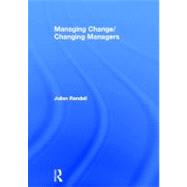
Managing Change / Changing Managers

by Randall,Julian
  • ISBN13:

    9780415323116

  • ISBN10:

    0415323118

  • eBook ISBN(s):

    9781134350803

  • Edition: 1st
  • Format: Hardcover
  • Copyright: 2004-09-01
  • Publisher: Routledge

Note: Supplemental materials are not guaranteed with Rental or Used book purchases.

Purchase Benefits

  • Free Shipping Icon Free Shipping On Orders Over $35!
    Your order must be $35 or more to qualify for free economy shipping. Bulk sales, PO's, Marketplace items, eBooks and apparel do not qualify for this offer.
  • eCampus.com Logo Get Rewarded for Ordering Your Textbooks! Enroll Now
List Price: $235.00 Save up to $189.46
  • Rent Book $176.25
    Add to Cart Free Shipping Icon Free Shipping

    TERM
    PRICE
    DUE
    USUALLY SHIPS IN 3-5 BUSINESS DAYS
    *This item is part of an exclusive publisher rental program and requires an additional convenience fee. This fee will be reflected in the shopping cart.

How To: Textbook Rental

Looking to rent a book? Rent Managing Change / Changing Managers [ISBN: 9780415323116] for the semester, quarter, and short term or search our site for other textbooks by Randall,Julian. Renting a textbook can save you up to 90% from the cost of buying.

Summary

Primarily a guide for managers and post-graduates entering the territory of the Management of Change, this book presents the reader with a thorough and challenging review of this fascinating subject. It boldly brings together material from popular management texts to address the theory and practical implications raised by these themes. By reviewing and challenging the current literature, the book encourages students to question and investigate popular thinking, helping them to enhance their criticality. The book draws the best practice out of the traditional theory, and includes typical exam questions, the best article and book references and offers a highly comprehensive textbook invaluable for all management students.

Author Biography

Julian Randall is Director of Programmes at the Centre for Business Education, St. Andrews University.

Table of Contents

List of figures ix
List of tables x
List of boxes xi
Acknowledgements xii
Introduction 1(246)
1 Finding your way in: managing change or changing managers
3(24)
Introduction
3(2)
Managing change
5(1)
Examining different contributions
6(1)
Different voices in the management of change
7(1)
Textbooks
8(2)
Learned articles and periodicals
10(2)
Theoretical assumptions underpinning management and change
12(1)
The subjective-objective dimension
13(2)
Order and conflict
15(2)
The context of change literature
17(1)
A historical perspective on the management of change
17(1)
The managerial paradigm
18(1)
Interventional approaches
19(1)
The excellence literature and human resource management
20(1)
The radical shift towards interpretation
21(1)
Underlying theoretical debates
21(1)
Addressing significant questions
22(1)
Discussion questions
23(1)
References and further reading
24(3)
2 Thinking about change: stages, process or continuum
27(26)
Introduction
27(1)
Different types of change
28(4)
Theoretical underpinnings of change
32(3)
Planned interventions and the management of change
35(2)
The enduring problem of resistance
37(3)
Emergent change and the management of change
40(3)
Emergent change and changing managers
43(4)
Discussion questions
47(2)
References and further reading
49(4)
3 Managing systems: open or closed?
53(26)
Introduction
53(3)
Organization as system
56(3)
The systems thinking approach
59(1)
Managing resistance to change
60(2)
Resisting management and change
62(2)
Summary issues arising
64(3)
Practical examples
67(7)
Discussion questions
74(2)
References and further reading
76(3)
4 Individuals and change: manageable or not?
79(26)
Introduction
79(8)
Individual learning: theory and practice
87(1)
Schemas, frames and scripts
88(4)
Motivational theory
92(2)
Individual learning theory and change
94(1)
Basic assumptions and enforced change
95(1)
Basic assumption and reframing
96(2)
Same song or new tune?
98(2)
Discussion questions
100(2)
References and further reading
102(3)
5 Cultural transformation: behaviours or perception?
105(28)
Introduction
105(10)
Culture as an operational construct
115(1)
Culture and Human Resource Management
116(1)
The formation of cultures
117(2)
National cultural typing
119(2)
Cultural transformation
121(2)
Culture as a metaphor and metaphors for culture
123(1)
Managing cultural transformation
124(2)
Emergent approaches to cultural change
126(1)
Discussion questions
127(1)
References and further reading
128(5)
6 N-step models: practice, performance or preference?
133(24)
Introduction
133(3)
The stepped change approach
136(9)
Theoretical underpinnings of n-step approaches
145(1)
Phase analysis and organizational development
146(3)
Benefits of the phase model
149(1)
Upbeat or downbeat?
150(3)
Discussion questions
153(2)
References and further reading
155(2)
7 Programmed approaches to organizational change: rhetoric and reality
157(28)
Introduction
157(1)
The rhetoric of radical programmed change
158(7)
The rhetoric of quality programmed change
165(3)
TQM and underpinning theory
168(3)
The content of TQM
171(2)
Steps in the TQM process
173(1)
Questions arising for TQM practitioners
174(1)
Management competencies and TQM
175(1)
Business Process Re-engineering revisited
176(1)
Emerging evidence of unease
177(2)
Postscript on New Public Management
179(1)
Summary
180(1)
Discussion questions
181(1)
References and further reading
182(3)
8 Project management: facilitation or constraint?
185(34)
Introduction
185(1)
What is a project and how is it managed?
186(2)
Some examples to work on
188(2)
Trying it out
190(3)
Management by objectives
193(3)
A broader view of project
196(4)
Ways in for the change agent
200(1)
Facilitating discussion
201(2)
Implementing change programmes
203(3)
Action research and action learning
206(1)
Evaluating change
207(4)
Emergent change strategies
211(1)
Evaluating training interventions
212(1)
Discussion questions
212(1)
Points to examine
213(1)
References and further reading
214(5)
9 Change agency: managing change or changing managers?
219(28)
Introduction
219(4)
Summary
223(2)
Leadership and management
225(1)
The management and leadership connection
226(1)
Different roles of change agents
226(1)
What change agents need
227(2)
So, how many change agents are needed?
229(1)
The use of experts as change agents
230(2)
Context of change agency
232(1)
Managing the culture
233(2)
Stages involving change agents
235(1)
Critical change situations
235(2)
Gaining and making alliances
237(1)
Process consultation
238(2)
Return to leadership
240(1)
What the good leader does
240(2)
Discussion questions
242(1)
References and further reading
243(4)
10 Conclusions 247(6)
Introduction
247(1)
Rethinking organizational change
248(1)
The deeper theoretical debate
249(2)
The way ahead
251(1)
References and further reading
252(1)
Index 253

Supplemental Materials

What is included with this book?

The New copy of this book will include any supplemental materials advertised. Please check the title of the book to determine if it should include any access cards, study guides, lab manuals, CDs, etc.

The Used, Rental and eBook copies of this book are not guaranteed to include any supplemental materials. Typically, only the book itself is included. This is true even if the title states it includes any access cards, study guides, lab manuals, CDs, etc.

Rewards Program