
rent-now

Rent More, Save More! Use code: ECRENTAL

5% off 1 book, 7% off 2 books, 10% off 3+ books

9780521652629

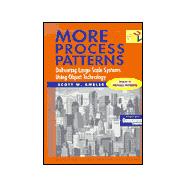
More Process Patterns: Delivering Large-Scale Systems Using Object Technology

by Scott W. Ambler
  • ISBN13:

    9780521652629

  • ISBN10:

    0521652626

  • Format: Hardcover
  • Copyright: 1999-01-13
  • Publisher: Cambridge University Press

Note: Supplemental materials are not guaranteed with Rental or Used book purchases.

Purchase Benefits

  • Free Shipping Icon Free Shipping On Orders Over $35!
    Your order must be $35 or more to qualify for free economy shipping. Bulk sales, PO's, Marketplace items, eBooks and apparel do not qualify for this offer.
  • eCampus.com Logo Get Rewarded for Ordering Your Textbooks! Enroll Now
List Price: $84.00 Save up to $21.00
  • Rent Book $63.00
    Add to Cart Free Shipping Icon Free Shipping

    TERM
    PRICE
    DUE
    SPECIAL ORDER: 1-2 WEEKS
    *This item is part of an exclusive publisher rental program and requires an additional convenience fee. This fee will be reflected in the shopping cart.

How To: Textbook Rental

Looking to rent a book? Rent More Process Patterns: Delivering Large-Scale Systems Using Object Technology [ISBN: 9780521652629] for the semester, quarter, and short term or search our site for other textbooks by Scott W. Ambler. Renting a textbook can save you up to 90% from the cost of buying.

Summary

With his new book, More Process Patterns, Scott Ambler picks up where Process Patterns left off. In this book, the author presents process patterns for the second half of the development lifecycle. He covers the Deliver phase and the Maintain and Support phase of large-scale, object-oriented system development. Each presented pattern is based upon proven, real-world techniques and is geared toward medium to large-size organizations who need to develop software internally to support their main line of business. The book covers major management issues, such as people and risk management, and quality assurance. Developers and project managers who have just taken their first OO development course will find this book essential. It takes the true needs of software development and delivery into consideration, including cross-project, maintenance, operations, and support issues. This book uses the Unified Modeling Language (UML).

Table of Contents

Illustrations
xxi(4)
Abbreviations xxv(4)
Foreword xxix(2)
Preface xxxi
Chapter 1 Introduction to More Process Patterns
1(40)
1.1 Exploring Object-Oriented Myths
2(1)
1.2 What Is a Process Pattern?
2(2)
1.3 Types of Process Patterns
4(1)
1.4 The Object-Oriented Software Process
5(3)
1.5 Serial in the Large
8(3)
1.5.1 Initiate
10(1)
1.5.2 Construct
10(1)
1.5.3 Deliver
10(1)
1.5.4 Maintain and Support
11(1)
1.6 Iterative in the Small
11(2)
1.6.1 Initiate
11(1)
1.6.2 Define and Validate Initial Requirements
12(1)
1.6.3 Define Initial Management Documents
12(1)
1.6.4 Justify the Project
12(1)
1.6.5 Define the Project Infrastructure
13(1)
1.7 Construct
13(4)
1.7.1 Model
13(1)
1.7.2 Program
14(2)
1.7.3 Generalize
16(1)
1.7.4 Test in the Small
16(1)
1.8 Deliver
17(2)
1.8.1 Test in the Large
18(1)
1.8.2 Rework
18(1)
1.8.3 Release
19(1)
1.8.4 Assess
19(1)
1.9 Maintain and Support
19(1)
1.9.1 Support the Application
19(1)
1.9.2 Identify Defects and Enhancements
20(1)
1.10 Delivering Incremental Releases Over Time
20(2)
1.11 Incremental vs. Parallel Development
22(1)
1.12 With a Little Bit of Glue to Hold It All Together
22(2)
1.13 Quality Assurance
24(1)
1.14 Project Management
25(1)
1.15 People Management
25(1)
1.16 Risk Management
25(1)
1.17 Reuse Management
25(1)
1.18 Training and Education
26(1)
1.19 Metrics Management
26(2)
1.20 Deliverable Management
28(1)
1.21 Infrastructure Management
28(1)
1.22 The Advantages and Disadvantages of the OOSP
29(1)
1.23 Toward a Mature Object-Oriented Software Process: The SEI CMM
30(2)
1.24 The Five CMM Maturity Levels
32(1)
1.25 How the Rest of This Book Is Organized
33(4)
1.26 What You have Learned in This Chapter
37(1)
1.27 References and Recommended Reading
38(3)
Part 1 Deliver 41(106)
Chapter 2 The Deliver Phase
43(16)
2.1 Initial Context: Entry Conditions to the Deliver Phase
45(1)
2.2 Solution: How Work Generally Proceeds During the Deliver Phase
46(3)
2.3 Solution: Project Tasks
49(6)
2.3.1 Managing the Deliver Phase
49(1)
2.3.2 People Management
50(1)
2.3.3 Potential Risks During the Deliver Phase
51(3)
2.3.4 Training and Education Issues
54(1)
2.4 Resulting Context: Exit Conditions from the Deliver Phase
55(1)
2.5 Secrets of Success
56(1)
2.6 Process Checklist
57(1)
2.6 What You Have Learned in This Chapter
58(1)
2.7 References and Recommended Reading
58(1)
Chapter 3 The Test in the Large Stage
59(24)
3.1 Initial Context: Entry Conditions for Testing in the Large
60(1)
3.2 Solution: Testing in the Large
61(13)
3.2.1 Accepting the Master Test/QA Plan
62(2)
3.2.2 Recording Defects
64(1)
3.2.3 Regression Testing
65(1)
3.2.4 System Testing
66(4)
3.2.5 User Testing
70(4)
3.3 Solution: Project Tasks
74(4)
3.3.1 Managing the Test in the Large Stage
74(1)
3.3.2 Training and Education
74(1)
3.3.3 People Management
75(1)
3.3.4 Quality Assurance
75(1)
3.3.5 Potential Risks While Testing in the Large
76(1)
3.3.6 Opportunities for Reuse
76(1)
3.3.7 Metrics
76(2)
3.4 Resulting Context: Exit Conditions for Testing in the Large
78(1)
3.5 Secrets of Success
78(2)
3.6 Process Checklist
80(1)
3.7 What You Have Learned in this Chapter
81(1)
3.8 References and Recommended Reading
81(2)
Chapter 4 The Rework Stage
83(14)
4.1 Initial Context: Entry Conditions for Reworking Your Application
84(1)
4.2 Solution: Reworking Your Application
85(5)
4.2.1 Prioritizing Defects
86(1)
4.2.2 Fixing Defects
87(3)
4.3 Solution: Project Tasks
90(3)
4.3.1 Managing the Rework Stage
90(1)
4.3.2 People Management
90(1)
4.3.3 Quality Assurance
91(1)
4.3.4 Potential Risks While Reworking Your Application
91(1)
4.3.5 Opportunities for Reuse
92(1)
4.3.6 Metrics
92(1)
4.4 Resulting Context: Exit Conditions for Reworking Your Application
93(1)
4.5 Secrets of Success
93(1)
4.6 Process Checklist
94(1)
4.7 What You Have Learned in This Chapter
95(1)
4.8 References and Recommended Reading
96(1)
Chapter 5 The Release Stage
97(28)
5.1 Initial Context: Entry Conditions for Releasing Your Application
98(1)
5.2 Solution: Releasing Your Application
99(16)
5.2.1 Preparing for Release
100(8)
5.2.2 Releasing the Application to Operations and Support
108(4)
5.2.3 Releasing the Application to the User Community
112(3)
5.3 Solution: Project Tasks
115(6)
5.3.1 Managing the Release Stage
116(1)
5.3.2 People Management
117(1)
5.3.3 Training and Education
118(1)
5.3.4 Quality Assurance
118(1)
5.3.5 Potential Risks While Releasing Your Application
119(1)
5.3.6 Opportunities for Reuse
119(1)
5.3.7 Metrics
120(1)
5.4 Resulting Context: Exit Conditions for Releasing Your Application
121(1)
5.5 Secrets of Success
122(1)
5.6 Process Checklist
122(2)
5.7 What You Have Learned in This Chapter
124(1)
5.8 References and Recommended Reading
124(1)
Chapter 6 The Assess Stage
125(22)
6.1 Initial Context: Entry Conditions for Assessing Your Efforts
126(2)
6.2 Solution: Assessing Your Efforts
128(10)
6.2.1 Assessing the Project and the Project Team
130(6)
6.2.2 Documenting the Assessment
136(2)
6.3 Solution: Project Tasks
138(3)
6.3.1 Managing the Assess Stage
138(1)
6.3.2 People Management
139(1)
6.3.3 Quality Assurance
139(1)
6.3.4 Potential Risks While Assessing Your Efforts
139(1)
6.3.5 Opportunities for Reuse
140(1)
6.3.6 Metrics
141(1)
6.4 Resulting Context: Exit Conditions for Assessing Your Efforts
141(1)
6.5 Secrets of Success
142(1)
6.6 Process Checklist
143(1)
6.7 What You Have Learned in This Chapter
144(1)
6.8 References and Recommended Reading
144(3)
Part 2 Maintain and Support 147(52)
Chapter 7 The Maintain and Support Phase
149(14)
7.1 Initial Context: Entry Conditions to the Maintain and Support Phase
153(1)
7.2 Solution: How Work Generally Proceeds During the Maintain and Support Phase
154(1)
7.3 Solution: Project Tasks
155(3)
7.3.1 Managing the Maintain and Support Phase
156(1)
7.3.2 People Management
156(1)
7.3.3 Potential Risks During the Maintain and Support Phase
156(2)
7.3.4 Training and Education Issues
158(1)
7.4 Resulting Context: Exit Conditions from the Maintain and Support Phase
158(1)
7.5 Secrets of Success
159(1)
7.6 Process Checklist
160(1)
7.7 What You Have Learned in This Chapter
160(1)
7.8 References and Recommended Reading
161(2)
Chapter 8 The Support Stage
163(22)
8.1 Initial Context: Entry Conditions for Supporting Your Application
164(1)
8.2 Solution: Supporting Your Application
165(8)
8.2.1 Responding to Support Requests
165(1)
8.2.2 Determining a Resolution
166(5)
8.2.3 Resolving the Issue
171(2)
8.3 Solution: Project Tasks
173(8)
8.3.1 Managing the Support Stage
173(4)
8.3.2 People Management
177(1)
8.3.3 Training and Education
178(1)
8.3.4 Quality Assurance
178(1)
8.3.4 Potential Risks While Supporting Your Application
179(1)
8.3.5 Opportunities for Reuse
179(1)
8.3.6 Metrics
180(1)
8.4 Resulting Context: Exit Conditions for Supporting Your Application
181(1)
8.5 Secrets of Success
181(1)
8.6 Process Checklist
182(1)
8.7 What You Have Learned in This Chapter
183(1)
8.8 References and Recommended Reading
183(2)
Chapter 9 The Identify Defects and Enhancements Stage
185(14)
9.1 Initial Context: Entry Conditions for Identification of Defects and Enhancements
186(1)
9.2 Solution: Identifying Defects and Enhancements
187(5)
9.2.1 Analyzing Software Change Requests (SCRs)
188(1)
9.2.2 Prioritizing Maintenance Changes
189(1)
9.2.3 Allocating Maintenance Changes to Configuration Items
190(2)
9.3 Solution: Project Tasks
192(3)
9.3.1 Managing the Identify Defects and Enhancements Stage
192(1)
9.3.2 People Management
192(1)
9.3.3 Training and Education
193(1)
9.3.4 Quality Assurance
193(1)
9.3.5 Potential Risks While Identifying Defects and Enhancements
193(1)
9.3.6 Opportunities for Reuse
194(1)
9.3.7 Metrics
194(1)
9.4 Resulting Context: Exit Conditions for Identification of Defects and Enhancements
195(1)
9.5 Secrets of Success
195(1)
9.6 Process Checklist
196(1)
9.7 What You Have Learned in This Chapter
197(1)
9.8 References and Recommended Reading
197(2)
Part 3 Tying Up Loose Ends 199(130)
Chapter 10 The Project and Cross-Project Tasks of the OOSP
201(80)
10.1 Managing Projects
201(7)
10.1.1 The Mechanics of Project Management
203(1)
10.1.2 Milestones
204(2)
10.1.3 Secrets of Success
206(2)
10.2 People Management
208(7)
10.2.1 Working Together
208(1)
10.2.2 Reward Systems
209(1)
10.2.3 Politics, Power Struggles, and Other Realities
210(2)
10.2.4 Staffing an Object-Oriented Project
212(2)
10.2.5 Secrets of Success
214(1)
10.3 Training and Education
215(12)
10.3.1 The Expected Lifespan of Skills
216(1)
10.3.2 Getting People Started with Objects
217(5)
10.3.3 Successful Approaches to Classroom Training and Education
222(1)
10.3.4 Successful Approaches to Mentoring
223(1)
10.3.5 Secrets of Success
224(3)
10.4 Quality Assurance
227(6)
10.4.1 Quality Assurance Throughout Your Project
228(2)
10.4.2 A Few Words About ISO 9000
230(1)
10.4.3 Secrets of Success
231(2)
10.5 Risk Management
233(9)
10.5.1 The Sources of Risk
234(2)
10.5.2 The Risk Management Process Pattern
236(2)
10.5.3 Potential Risks Throughout Your Project
238(1)
10.5.4 Secrets of Success
238(4)
10.6 Reuse Management
242(18)
10.6.1 Types of Reuse
244(8)
10.6.2 Reuse Throughout Your Project
252(1)
10.6.3 The Reuse Capability Model
252(1)
10.6.4 Reuse Tools
252(5)
10.6.5 Secrets of Success
257(3)
10.7 Metrics Management
260(8)
10.7.1 Why Should You Collect Metrics?
260(1)
10.7.2 Collecting Metrics Throughout Your Project
261(1)
10.7.3 Metrics Categories
261(1)
10.7.4 Metrics Applicable to the Entire OOSP
261(2)
10.7.5 Establishing a Metrics Program
263(3)
10.7.6 Secrets of Success
266(2)
10.8 Managing Deliverables
268(5)
10.8.1 Software Configuration Management
268(1)
10.8.2 The Qualities of Good Deliverables
268(1)
10.8.3 Deliverables Throughout Your Project
269(3)
10.8.4 Secrets of Success
272(1)
10.9 Managing Infrastructure
273(3)
10.9.1 Infrastructure Throughout Your Project
274(1)
10.9.2 Secrets of Success
274(2)
10.10 What You Have Learned in This Chapter
276(1)
10.11 References and Recommended Reading
276(5)
Chapter 11 Introducing the OOSP into Your Organization
281(48)
11.1 The Capability Maturity Model (CMM)
283(4)
11.1.1 The Five CMM Maturity Levels
284(3)
11.1.2 Understanding the Key Process Areas (KPAs)
287(1)
11.1.3 Mapping the Key Process Areas to Our OOSP
287(1)
11.1.4 A Potential Schedule for Introducing Process Patterns Into Your Organization
287(1)
11.2 Introducing Process Patterns Into Your Organization
287(27)
11.2.1 Initiate--Getting Your Process Improvement Program Started
291(5)
11.2.2 Diagnose--Assess Your Situation and Identify Your Goals
296(3)
11.2.3 Establish--Organizing Your Process Improvement Program
299(6)
11.2.4 Act--Defining Process Processing for Your Organization
305(6)
11.2.5 Act--Implementing Processes
311(1)
11.2.6 Leverage--Assess and Iterate
312(2)
11.3 Rethinking Your Organizational Structure
314(5)
11.4 Secrets of Success
319(6)
11.5 What You Have Learned in This Chapter
325(1)
11.6 References and Recommended Reading
325(4)
Glossary 329(32)
Index 361

Supplemental Materials

What is included with this book?

The New copy of this book will include any supplemental materials advertised. Please check the title of the book to determine if it should include any access cards, study guides, lab manuals, CDs, etc.

The Used, Rental and eBook copies of this book are not guaranteed to include any supplemental materials. Typically, only the book itself is included. This is true even if the title states it includes any access cards, study guides, lab manuals, CDs, etc.

Rewards Program