

rent-now

Rent More, Save More! Use code: ECRENTAL

5% off 1 book, 7% off 2 books, 10% off 3+ books

9780060652968

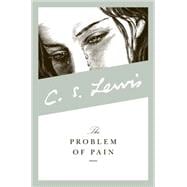
The Problem of Pain

by C. S. Lewis
  • ISBN13:

    9780060652968

  • ISBN10:

    0060652969

  • eBook ISBN(s):

    9780061947643

  • Format: Paperback
  • Copyright: 2010-07-19
  • Publisher: HarperCollins Publications

Note: Supplemental materials are not guaranteed with Rental or Used book purchases.

Purchase Benefits

  • Free Shipping Icon Free Shipping On Orders Over $35!
    Your order must be $35 or more to qualify for free economy shipping. Bulk sales, PO's, Marketplace items, eBooks and apparel do not qualify for this offer.
  • eCampus.com Logo Get Rewarded for Ordering Your Textbooks! Enroll Now
  • Buyback Icon We Buy This Book Back!
    In-Store Credit: $0.53
    Check/Direct Deposit: $0.50
    PayPal: $0.50
List Price: $17.99 Save up to $9.90
  • Rent Book
    $8.09
    Add to Cart Free Shipping Icon Free Shipping

    TERM
    PRICE
    DUE
    IN STOCK USUALLY SHIPS IN 24 HOURS.
    HURRY! ONLY 3 COPIES IN STOCK AT THIS PRICE
    *This item is part of an exclusive publisher rental program and requires an additional convenience fee. This fee will be reflected in the shopping cart.

How To: Textbook Rental

Looking to rent a book? Rent The Problem of Pain [ISBN: 9780060652968] for the semester, quarter, and short term or search our site for other textbooks by C. S. Lewis. Renting a textbook can save you up to 90% from the cost of buying.

About This Book

The Problem of Pain by C.S. Lewis is a thought-provoking and elegantly written work that delves into the age-old question of why humanity suffers. First published in 1940, this book has become a classic in Christian apologetics, offering a nuanced exploration of the relationship between God's goodness and the presence of pain in the world.

Who Uses It?

Primarily, this book is used by students and educators in theology, philosophy, and religious studies courses at the college and university levels. It is also a valuable resource for anyone interested in understanding the theological and philosophical perspectives on suffering, including professionals looking to deepen their knowledge or expand their understanding of these complex issues.

History and Editions

The Problem of Pain has been a staple in theological discussions for over eight decades. The most recent edition, published in 2015, retains the original's depth and thoughtfulness while maintaining relevance for contemporary readers. This revised edition includes updated discussions and reflections that continue to resonate with readers today.

Author and Other Works

C.S. Lewis was a renowned author, philosopher, and theologian. He is best known for his works such as "Mere Christianity," "The Abolition of Man," and "The Chronicles of Narnia." His writing style is characterized by clarity, wit, and a deep understanding of human nature and spirituality.

Detailed Information

ISBNs and Formats

Hardcover: ISBN-13: 9780060652968

eTextbook: ISBN-13: 9780060652975 (The ebook for "The Problem of Pain" is available right here on eCampus.com!)

eTextbook: ISBN-13: 9780060652982 (The ebook for "The Problem of Pain" is available right here on eCampus.com!)

Paperback: ISBN-13: 9780060652999

Rental Options

Rental options are available through eCampus.com with various rental durations.

Publication Details

Publisher: HarperOne

Publication Date: April 1, 2015

Number of Pages: 161

Language: English

Other Editions and Formats

While this specific edition is detailed above, other formats and editions may be available through eCampus.com. For the most accurate and up-to-date information on all available formats, please visit our website.

Related ISBNs:

9780060652975

9780060652982

9780060652999

Note: The information provided is accurate as of the current date and is subject to change based on new editions or formats becoming available.

Author Biography

C. S. Lewis was a professor of medieval and Renaissance literature at Oxford and Cambridge universities who wrote more than thirty books in his lifetime.

Table of Contents

Preface xi
Introductory
1(15)
Divine Omnipotence
16(12)
Divine Goodness
28(20)
Human Wickedness
48(15)
The Fall of Man
63(23)
Human Pain
86(24)
Human Pain, Continued
110(9)
Hell
119(13)
Animal Pain
132(16)
Heaven
148(12)
Appendix 160

Supplemental Materials

What is included with this book?

The New copy of this book will include any supplemental materials advertised. Please check the title of the book to determine if it should include any access cards, study guides, lab manuals, CDs, etc.

The Used, Rental and eBook copies of this book are not guaranteed to include any supplemental materials. Typically, only the book itself is included. This is true even if the title states it includes any access cards, study guides, lab manuals, CDs, etc.

Excerpts

The Problem of Pain

Chapter One

Introductory

I wonder at the hardihood with which such
persons undertake to talk about God. In a treatise
addressed to infidels they begin with a chapter
proving the existence of God from the works of
Nature...this only gives their readers grounds
for thinking that the proofs of our religion are
very weak.... It is a remarkable fact that no
canonical writer has ever used Nature to prove God.

Pascal, Pensées, IV, 242, 243

Not many years ago when I was an atheist, if anyone had asked me, 'Why do you not believe in God?' my reply would have run something like this: 'Look at the universe we live in. By far the greatest part of it consists of empty space, completely dark and unimaginably cold. The bodies which move in this space are so few and so small in comparison with the space itself that even if every one of them were known to be crowded as full as it could hold with perfectly happy creatures, it would still be difficult to believe that life and happiness were more than a byproduct to the power that made the universe. As it is, however, the scientists think it likely that very few of the suns of space -- perhaps none of them except our own -- have any planets; and in our own system it is improbable that any planet except the Earth sustains life. And Earth herself existed without life for millions of years and may exist for millions more when life has left her. And what is it like while it lasts? It is so arranged that all the forms of it can live only by preying upon one another. In the lower forms this process entails only death, but in the higher there appears a new quality called consciousness which enables it to be attended with pain. The creatures cause pain by being born, and live by inflicting pain, and in pain they mostly die. In the most complex of all the creatures, Man, yet another quality appears, which we call reason, whereby he is enabled to foresee his own pain which henceforth is preceded with acute mental suffering, and to foresee his own death while keenly desiring permanence. It also enables men by a hundred ingenious contrivances to inflict a great deal more pain than they otherwise could have done on one another and on the irrational creatures. This power they have exploited to the full. Their history is largely a record of crime, war, disease, and terror, with just sufficient happiness interposed to give them, while it lasts, an agonised apprehension of losing it, and, when it is lost, the poignant misery of remembering. Every now and then they improve their condition a little and what we call a civilisation appears. But all civilisations pass away and, even while they remain, inflict peculiar sufferings of their own probably sufficient to outweigh what alleviations they may have brought to the normal pains of man. That our own civilisation has done so, no one will dispute; that it will pass away like all its predecessors is surely probable. Even if it should not, what then? The race is doomed. Every race that comes into being in any part of the universe is doomed; for the universe, they tell us, is running down, and will sometime be a uniform infinity of homogeneous matter at a low temperature. All stories will come to nothing: all life will turn out in the end to have been a transitory and senseless contortion upon the idiotic face of infinite matter. If you ask me to believe that this is the work of a benevolent and omnipotent spirit, I reply that all the evidence points in the opposite direction. Either there is no spirit behind the universe, or else a spirit indifferent to good and evil, or else an evil spirit.'

There was one question which I never dreamed of raising. I never noticed that the very strength and facility of the pessimists' case at once poses us a problem. If the universe is so bad, or even half so bad, how on earth did human beings ever come to attribute it to the activity of a wise and good Creator? Men are fools, perhaps; but hardly so foolish as that. The direct inference from black to white, from evil flower to virtuous root, from senseless work to a workman infinitely wise, staggers belief. The spectacle of the universe as revealed by experience can never have been the ground of religion: it must always have been something in spite of which religion, acquired from a different source, was held.

It would be an error to reply that our ancestors were ignorant and therefore entertained pleasing illusions about nature which the progress of science has since dispelled. For centuries, during which all men believed, the nightmare size and emptiness of the universe was already known. You will read in some books that the men of the Middle Ages thought the Earth flat and the stars near, but that is a lie. Ptolemy had told them that the Earth was a mathematical point without size in relation to the distance of the fixed stars -- a distance which one medieval popular text estimates as a hundred and seventeen million miles. And in times yet earlier, even from the beginnings, men must have got the same sense of hostile immensity from a more obvious source. To prehistoric man the neighbouring forest must have been infinite enough, and the utterly alien and infest which we have to fetch from the thought of cosmic rays and cooling suns, came snuffing and howling nightly to his very doors. Certainly at all periods the pain and waste of human life was equally obvious. Our own religion begins among the Jews, a people squeezed between great warlike empires, continually defeated and led captive, familiar as Poland or Armenia with the tragic story of the conquered. . .

The Problem of Pain. Copyright © by C. Lewis. Reprinted by permission of HarperCollins Publishers, Inc. All rights reserved. Available now wherever books are sold.

Excerpted from The Problem of Pain by C. S. Lewis
All rights reserved by the original copyright owners. Excerpts are provided for display purposes only and may not be reproduced, reprinted or distributed without the written permission of the publisher.

Rewards Program