
rent-now

Rent More, Save More! Use code: ECRENTAL

5% off 1 book, 7% off 2 books, 10% off 3+ books

9780199208227

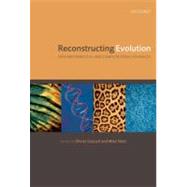
Reconstructing Evolution New Mathematical and Computational Advances

by Gascuel, Olivier; Steel, Mike
  • ISBN13:

    9780199208227

  • ISBN10:

    0199208220

  • eBook ISBN(s):

    9780191525988

  • Format: Hardcover
  • Copyright: 2007-08-23
  • Publisher: Oxford University Press

Note: Supplemental materials are not guaranteed with Rental or Used book purchases.

Purchase Benefits

  • Free Shipping Icon Free Shipping On Orders Over $35!
    Your order must be $35 or more to qualify for free economy shipping. Bulk sales, PO's, Marketplace items, eBooks and apparel do not qualify for this offer.
  • eCampus.com Logo Get Rewarded for Ordering Your Textbooks! Enroll Now
List Price: $144.00 Save up to $98.01
  • Rent Book $108.00
    Add to Cart Free Shipping Icon Free Shipping

    TERM
    PRICE
    DUE
    USUALLY SHIPS IN 3-5 BUSINESS DAYS
    *This item is part of an exclusive publisher rental program and requires an additional convenience fee. This fee will be reflected in the shopping cart.

How To: Textbook Rental

Looking to rent a book? Rent Reconstructing Evolution New Mathematical and Computational Advances [ISBN: 9780199208227] for the semester, quarter, and short term or search our site for other textbooks by Gascuel, Olivier; Steel, Mike. Renting a textbook can save you up to 90% from the cost of buying.

Summary

Evolution is a complex process, acting at multiple scales, from DNA sequences and proteins to populations of species. Understanding and reconstructing evolution is of major importance in numerous subfields of biology. For example, phylogenetics and sequence evolution is central to comparativegenomics, attempts to decipher genomes, and molecular epidemiology. Phylogenetics is also the focal point of large-scale international biodiversity assessment initiatives such as the 'Tree of Life' project, which aims to build the evolutionary tree for all extant species. Since the pioneering work in phylogenetics in the 1960s, models have become increasingly sophisticated to account for the inherent complexity of evolution. They rely heavily on mathematics and aim at modelling and analyzing biological phenomena such as horizontal gene transfer, heterogeneity ofmutation, and speciation and extinction processes. This book presents these recent models, their biological relevance, their mathematical basis, their properties, and the algorithms to infer them from data. A number of subfields from mathematics and computer science are involved: combinatorics,graph theory, stringology, probabilistic and Markov models, information theory, statistical inference, Monte Carlo methods, continuous and discrete algorithmics. This book arises from the em/Mathematics of Evolution and Phylogenetics/em meeting at the Mathematical Institute Henri Poincare, Paris, in June 2005 and is based on the outstanding state-of-the-art reports presented by the conference speakers. Ten chapters - based around five themes - provide adetailed overview of key topics, from the underlying concepts to the latest results, some of which are at the forefront of current research.

Author Biography


Olivier Gascuel leads a research group at LIRMM-CNRS, Montpellier. He is an associate editor of Systematic Biology and belongs to the editorial board of BMC-Bioinformatics, BMC-Evolutionary Biology, and BMC-Algorithms for Molecular Biology. He has published 110 papers and book chapters, and authored several widely used programs in phylogenetics and bioinformatics. Mike Steel directs the Biomathematics Research Centre at the University of Canterbury, New Zealand and is an associate editor of the journal Systematic Biology. He has published 120 papers and book chapters on mathematical aspects of evolutionary biology, and is co-author of the book Phylogenetics (Oxford University Press, 2003).

Table of Contents

Introduction
List of Contributors
I Evolution in populations
Trees of genes in populations
The evolutionary analysis of measurably evolving populations using serially sampled gene sequences
Models of sequence evolution
Modelling the variability of evolutionary processes
Phylogenetic invariants
Tree shape, speciation and extinction
Some models of phylogenetic tree shape
Phylogenetic diversity: from combinatorics to ecology
Trees from subtrees and characters
Fragmentation of large data sets in phylogenetic analyses
Identifying and defining trees
From trees to networks
Split networks and reticulate networks
Hybridization networks
Index
Table of Contents provided by Publisher. All Rights Reserved.

Supplemental Materials

What is included with this book?

The New copy of this book will include any supplemental materials advertised. Please check the title of the book to determine if it should include any access cards, study guides, lab manuals, CDs, etc.

The Used, Rental and eBook copies of this book are not guaranteed to include any supplemental materials. Typically, only the book itself is included. This is true even if the title states it includes any access cards, study guides, lab manuals, CDs, etc.

Rewards Program